Ancestral Knowledge and Inter-Generational Intimacy in Hair, Paper, Water…
Sprouts Film Festival ‘26. eco competition
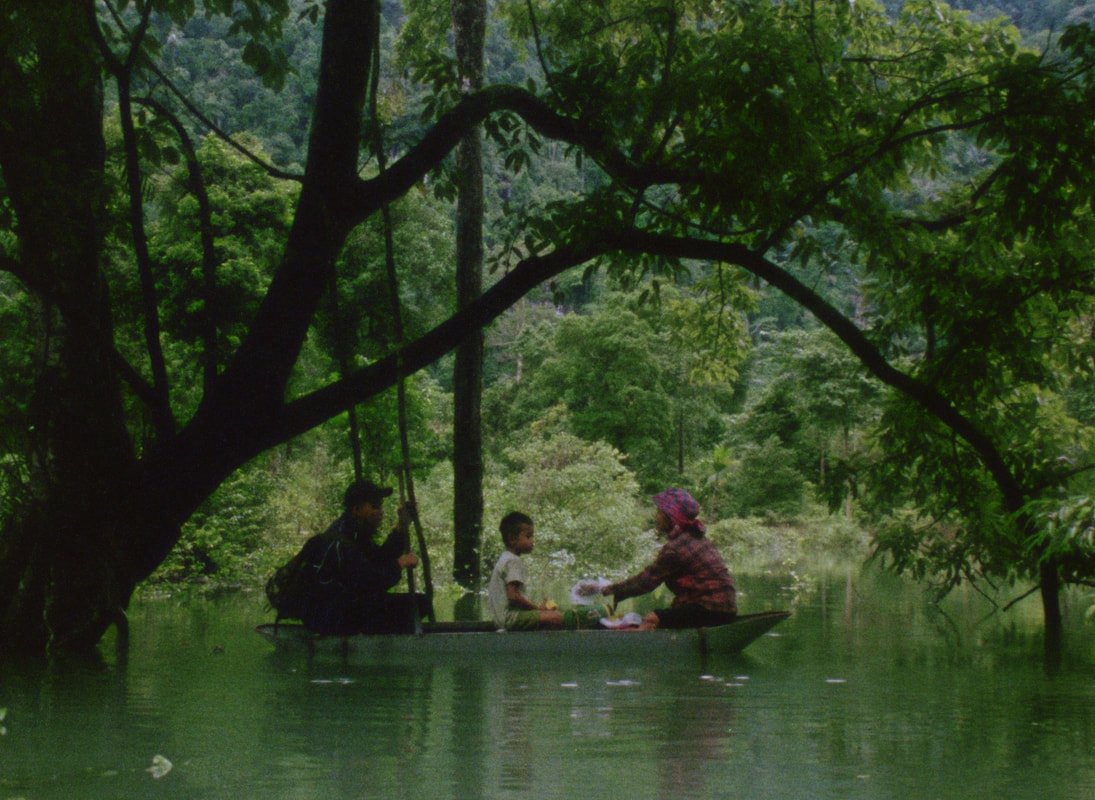
© Film still, Hair, Paper, Water…
Wilco Van Petegem watched Hair, Paper, Water… (2025), a film by Belgian filmmaker Nicolas Graux and Vietnamese director Trương Minh Quý, which explores themes of cultural survival, intergenerational memory, and the tension between rural tradition and urban modernity.
In a rapidly evolving world, nature and minoritized cultural traditions are increasingly under threat. This context confronts today’s filmmakers with a difficult yet urgent task: how does one address these issues without sacrificing creativity, complexity, and emotional resonance? Hair, Paper, Water… offers a noteworthy response.
Hair, Paper, Water…, a 2025 film directed by Belgian filmmaker Nicolas Graux and Vietnamese director Trương Minh Quý, follows the life of Cao Thị Hậu, an elderly woman belonging to the Rục community, an ethnic minority that lived in isolation in caves in rural Vietnam until the 1950s. Living with her grandchildren, she passes on the endangered Rục language and ancestral knowledge.
It would be all too easy to fall back on Orientalist tropes and reduce this film to an immersive, dream-like experience. On the surface, this story does indeed bear some resemblance to a Herzogian approach with its misty mountain peaks, humid caves and never-ending rivers. In American cinema as well, the Vietnamese landscape has been the locus for many critically acclaimed films. Kubrick's Full Metal Jacket (1987) or Coppola’s Apocalypse Now (1979) frame the region in an exoticized manner, imbuing it with a certain distance and mystery.
“It is not pretentiously poetic, but beautiful in its simplicity, which is where the source of its strength lies.”
These comparisons, however, do not give Hair, Paper, Water… enough credit. In contrast, the film is quite straightforward. Operating somewhere between nature documentary, educational film and home movie, directors Graux & Trương manage to capture beauty in the simple. Shot on 16mm and telling a candid story, this documentary seemingly travels back to the roots of cinema, unveiling why the medium is so successful in producing compelling stories and transferring sentiment across borders. It is not pretentiously poetic, but beautiful in its simplicity, which is where the source of its strength lies.
The verdant foliage of rural Vietnam is shown in all its shades of green and the color palette is further nuanced when the turquoise-colored creek appears. Shots of the tall apartment buildings at nighttime show the immense architecture that surrounds Cao Thị Hậu. The resulting fascination that radiates from these towers shows how Graux & Trương succeed in transferring a particular mood. “These houses hang in the air, built so high they touch the sky”, she says, as she looks up at the lit-up windows that create a starry skyline of urban design. Both the calming scenes set in the rural regions and the vibrant urban snapshots are imbued with a patient and contemplative mood, allowing one to fully take in these beautifully shot frames.
Accompanying the breathtaking Vietnamese landscapes is a unique soundscape that is equally powerful in setting the tone. The film might have moments of silence, but it is never silent; soundsof buzzing mosquitos, heavy raindrops and chirping birds create a palpable atmosphere, turning viewersinto listeners. When entering the city of Saigon, these sounds turn into a jumble of engines and honking. This textured auditory ambience is synergized with the skillfully executed cinematography, resulting in a laudable symphony of image and sound.
Aside from its formal qualities, Hair, Paper, Water… provides a story that is painfully endearing and intriguingly beautiful. Minute after minute, viewers are allowed deeper into the layers of memory and sentiment, ultimately ending up in the cave where this story found its origin. The relationship between grandmother and grandson feels personal and unique; their shared moments of silence and mundane conversations carry the spirit of their distinct connection. Hence, much like the Rục language Cao Thị Hậu passes on, the two have developed their own unique language of silence and habits.
From running along the beach on a windy day to sharing a mango on a boat during flood season, the film allows a glimpse into the moments that one day will transform into distant nostalgia. The intimate shots of Cao Thị Hậu and her grandson tap into the process of finding shelter in the arms of a grandparent, wherein their history, experience and wisdom provide the young boy with tools to navigate his own battles of childhood. Hence, their idiosyncratic connection simultaneously appeals to the recognizable feeling of security that a grandparent can offer.
“These layers of complexity are accompanied by a certain formal and narrative simplicity.”
By intertwining themes of social class, literacy, intergenerational tradition, linguistic preservation and urbanization, Hair, Paper, Water… proves to be multi-layered and doesn’t shy away from complexities. Structural social issues are combined with a unique ancestral history in an effortless manner. These layers of complexity are accompanied by a certain formal and narrative simplicity. No shot is too long; no theme is too vague. Somehow it all clicks. It is this harmony between sound, image and story that makes the film feel so fluid and evident.
Although the art-house aesthetic might burden the film with a certain prejudice about its content, Graux & Trương present something accessible and coherent, which only helps their mission of shining light on a linguistic tradition that seems to be in danger of fading away. Hair, Paper, Water… is made with love: for cinema, for nature, for its setting, and for its participants. This love reverberates through the screen, and I could not refrain from loving it back.
Hair, Paper, Water… will be screened on June 4th & 5th at Sprouts Film Festival, with the filmmakers in attendance.
Wilco Van Petegem (2003) is film studies graduate based in Antwerp. Departing from a passion for cinema, his writing focuses on the intersections between art, social theory and popular culture. In 2026 he worked as an intern at Avila, a Brussels-based non-profit organisation which distributes Belgian auteur cinema.