Waterworlds: Beneath the Surface of Everything
Sprouts Film Festival ‘26. eco shorts competition
During Sprouts Film Festival 2026, Fortunata (Tino) Manenti watched the four short films that make up Waterworlds, the festival’s Eco Shorts Competition programme. Spanning animation, documentary, fiction, and experimental filmmaking, the selection explores water as a force that shapes lives, communities, and environments.
Water represents, undeniably, the life source necessary for the survival of the human species. It constitutes us; it frees us from earthly matters, and it mirrors us back to ourselves, reminding us that to look into water is, in the end, to investigate the origin of all things. The selection of the four shorts of Waterworlds, united under Sprouts’ eco-competition, casts water as an active participant and living force whose fate, film after film, becomes inseparable from our own.
Water Girl
With water as a constant presence, the first short, Water Girl, directed by Sandra Desmazières, brings the viewer into a moment of remembrance and longing. It centers on Mia, an elderly freediver, who has spent her whole life by the sea, fishing and gliding through seaweed and rocks. As time moves through her, she experiences a change, reflected in the transformation of her body within the shifting depths of the French sea. Traced in the hand-drawn and watercolor strokes of its animation, the woman’s body moves in fluidity with water, rendering that steady alteration a mirror of all she has loved, lost, and carried within her.

© Water Girl (2025) by Sandra Desmazières
All the bodies drawn, therefore, whether old, young, beautiful, or ugly, and those who have experienced motherhood, become a denominator for the resilience of a life fully lived and fully felt. This resilience is born from a quiet resistance against a society that blamed Mia and other women for not choosing to have a family, a shame as persistent as it is hard to let go. Yet, the weight of all of it seems to dissolve underwater.
It becomes the only place where Mia can find a kind of serenity, solely accompanied by the natural sounds of nature, of insects that scratch, and of the algae that take over the submarine. Its importance is altered by the lack of speech, replaced instead by some type of discreet music that accompanies the visual transitions, which take on a more melancholic sound the longer Mia depicts her life. Clearly, her true self was never on the land to begin with. Rather, it is under the water, that asks nothing of her and accepts her in every shape and form she is and will be.
Beneath Which Rivers Flow
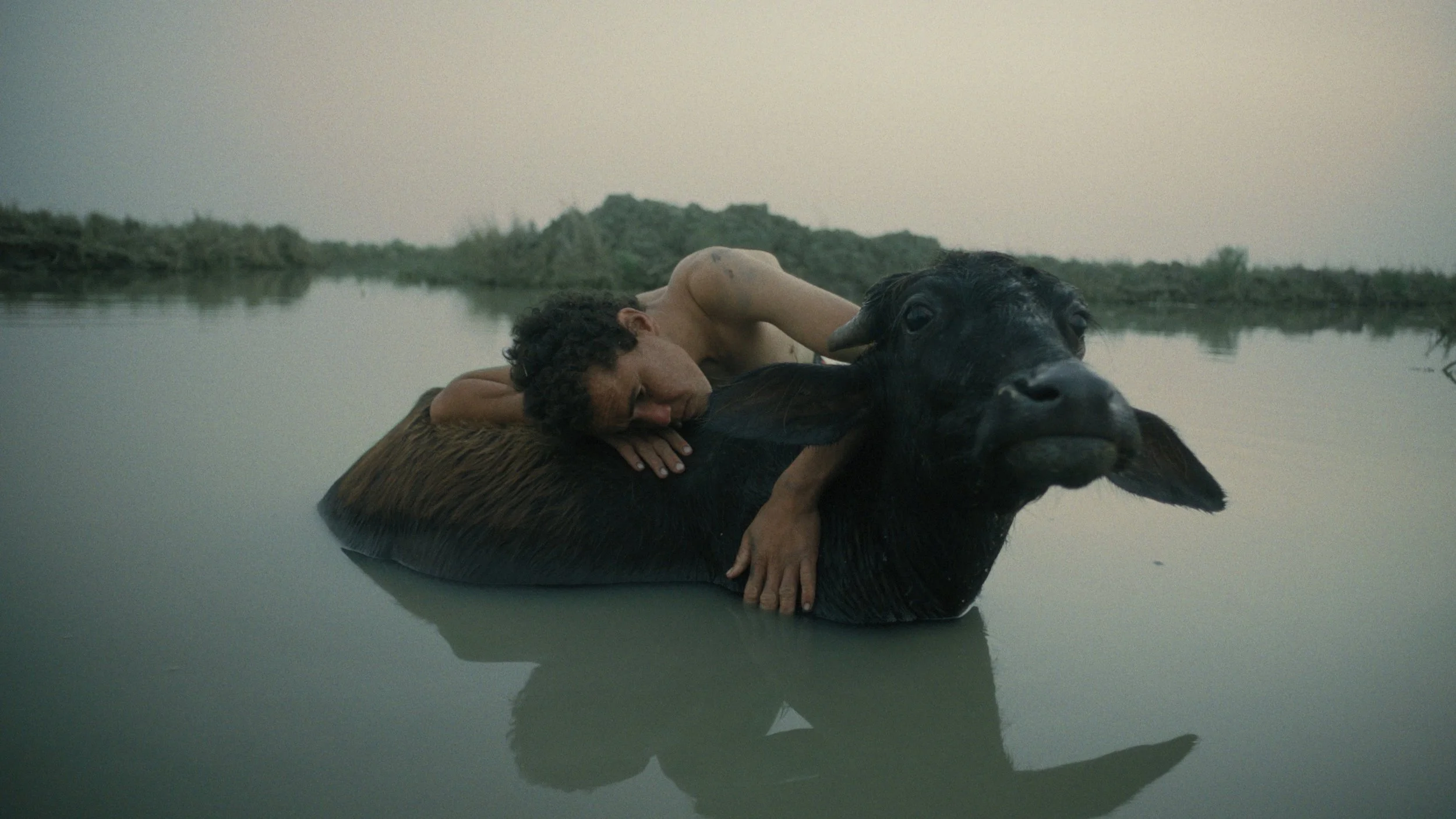
Passing now from the depths of the sea to the marshlands of Southern Iraq, Beneath Which Rivers Flow settles into a slow and meditative rhythm, told through the eyes of film director Ali Yahya. In a remote and desolated land bound to the river and untouched by the world beyond, Ibrahim and his family live among the reeds and the animals they care for.
© Beneath Which The Rivers Flow (2025) by Ali Yahya
Young Ibrahim, of withdrawn and quiet nature, finds himself living in solace with animals, particularly with his dear buffalo, his one true companion in a land that asks for very little and gives everything that is necessary. Then, suddenly, a dense fog descends, and within it is an ominous shift. Frenetically, the flourishing and breathing environment of the marshlands gives way to drying rivers and cracking earth, translating water from a sustainer to an absence.
This absence, carried through a grainy cinematographic filter, becomes something essential, a quiet pressure that makes the vanishing of an entire world feel not hypothetical but imminent. Nonetheless, the film needs no words to get the message to come across. The water is the face of Ibrahim’s own unraveling and that of every living creature left with nothing but the will to survive.
In a time and period where environmental destruction is increasingly and slowly destroying the lives of underprivileged territories, Beneath Which Rivers Flow presents a slow-building dread until it exponentially reveals itself. A vision of collapse, revealing a future that has already arrived.
Last Tropics
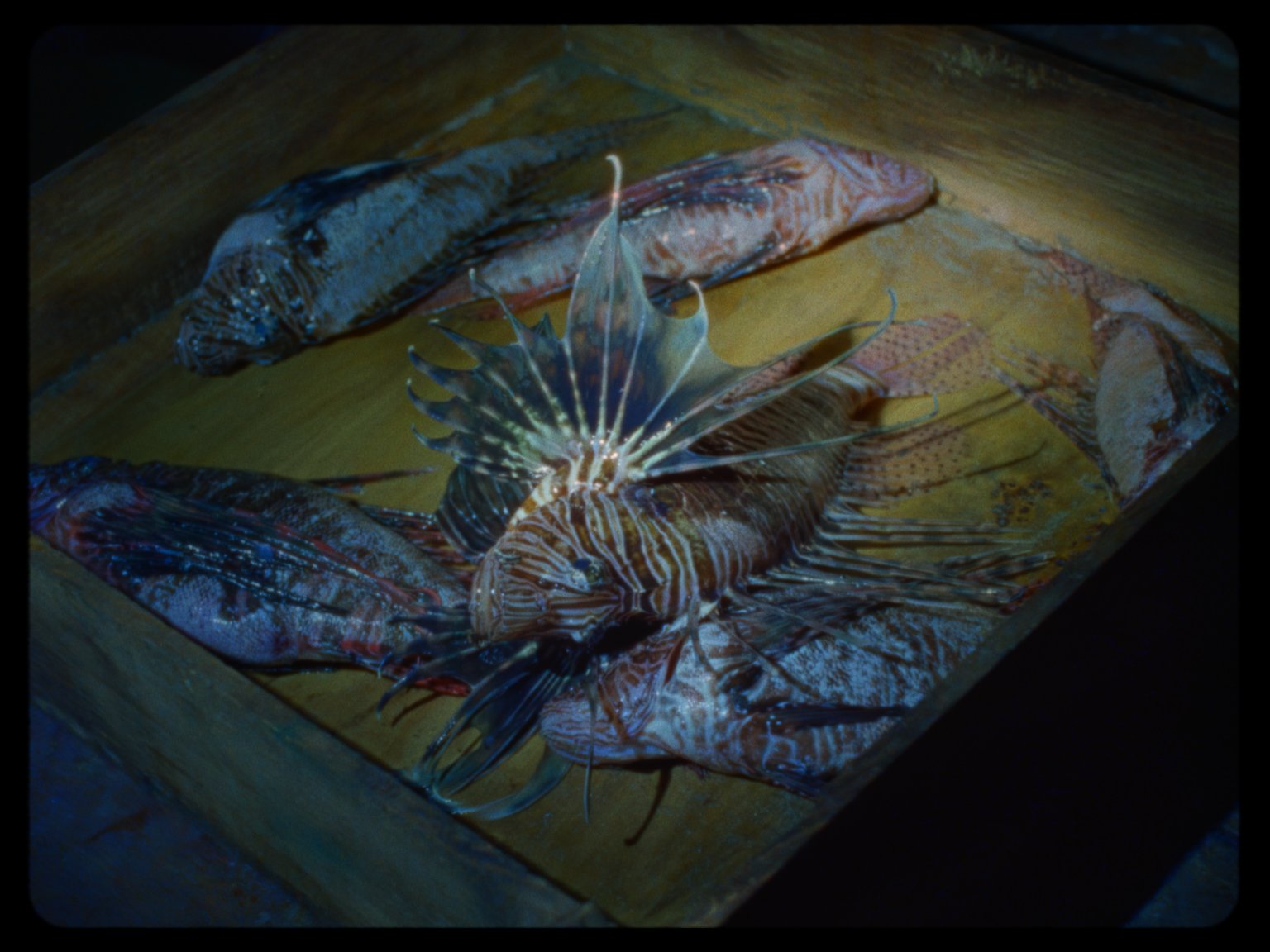
Continuing along the lines of an environmental crisis, Last Tropics, directed by Thanasis Trouboukis, presents a carefully calibrated Mediterranean aesthetic across a Greek coastal village facing a rising marine crisis.
© Last Tropics (2025) by Thanasis Trouboukis
Blending documentary and fiction against a sun-bleached rural landscape, Last Tropics follows three fishermen, two men and a woman, who share a small camper and a weird romantic triangle that the film leaves doubly undefined. Likewise, their relationship with the sea is deeply contradictory. For them, the water is both a provider and a victim, the very thing they depend on and the thing they are slowly destroying. Confronted with the reality of a dying fishing practice, they resort to dynamite fishing to sustain their own chosen family. It’s an act that actively questions if it should be considered a necessity of survival or merely the gesture of a generation with nowhere left to go.
Through its modest, analog-type cinematography, the beauty of the Mediterranean is set against the nauseous and visceral images of the dying fish along its coast. The result is a portrait of a collapsed marine ecosystem and a village running out of time, trapping those who remain in an uncertain future. Why should this young generation feel responsible for what is being done to the sea when those who came before them, with far greater power and far less consequence, did so much worse? Beneath all this beauty lies a deep precarity, one that breeds violence and death where community and care for the sea might have grown.
Acid City
If the previous shorts presented worlds on the verge of collapse, Acid City, directed by Will Freudenheim, depicts one where collapse has already arrived and where water, once a life source, has been poisoned by ocean acidification. A punk, ethnographic, and pseudo-animated documentary about a fictional city rising from a vast acidic ocean, the film is referential and darkly comic in equal measure.

© Acid City (2026) by Will Freudenheim
Despite its fundamentally devastating premise, the silliness and sassiness of the characters, some seen singing, dancing, or joking, and their easy-to-spot American accents cutting through the oppressive heat of an unstable, chaotic city, shape a world that is, against all odds, strangely fun to watch. Under apocalyptic red skies, Acid City renders ecological and societal collapse almost livable.
It is precisely this that makes it so unsettling. By adopting the tourist gaze, treating catastrophe as a destination worth visiting, the film implicates its audience as much as its characters, asking how long we have been watching the world dissolve while calling it entertainment.
Acid City completes the transformation of water across all four films, from life source to absence to battleground to poison. Together, they show that cinema can make visible the transformations caused by an ecological collapse. By tracing water across different historical and cultural contexts, the environmental crisis is revealed in the everyday reality that shapes every aspect of life. The common thread running through all four is the quiet, insistent recognition that the future is not coming. The future is already here, and water is its most honest witness.
A researcher, programmer, and producer from Southern Italy, based in Utrecht. My main interests lie in queer cinema, female filmmaking, arthouse & experimental aesthetics, through which I explore questions of identity, representation, and the transformative power of film in shaping cultural discourse.