The Persistence of Ordinary Life in The Chronicles From The Siege
Sprouts Film Festival ‘26. debut competition
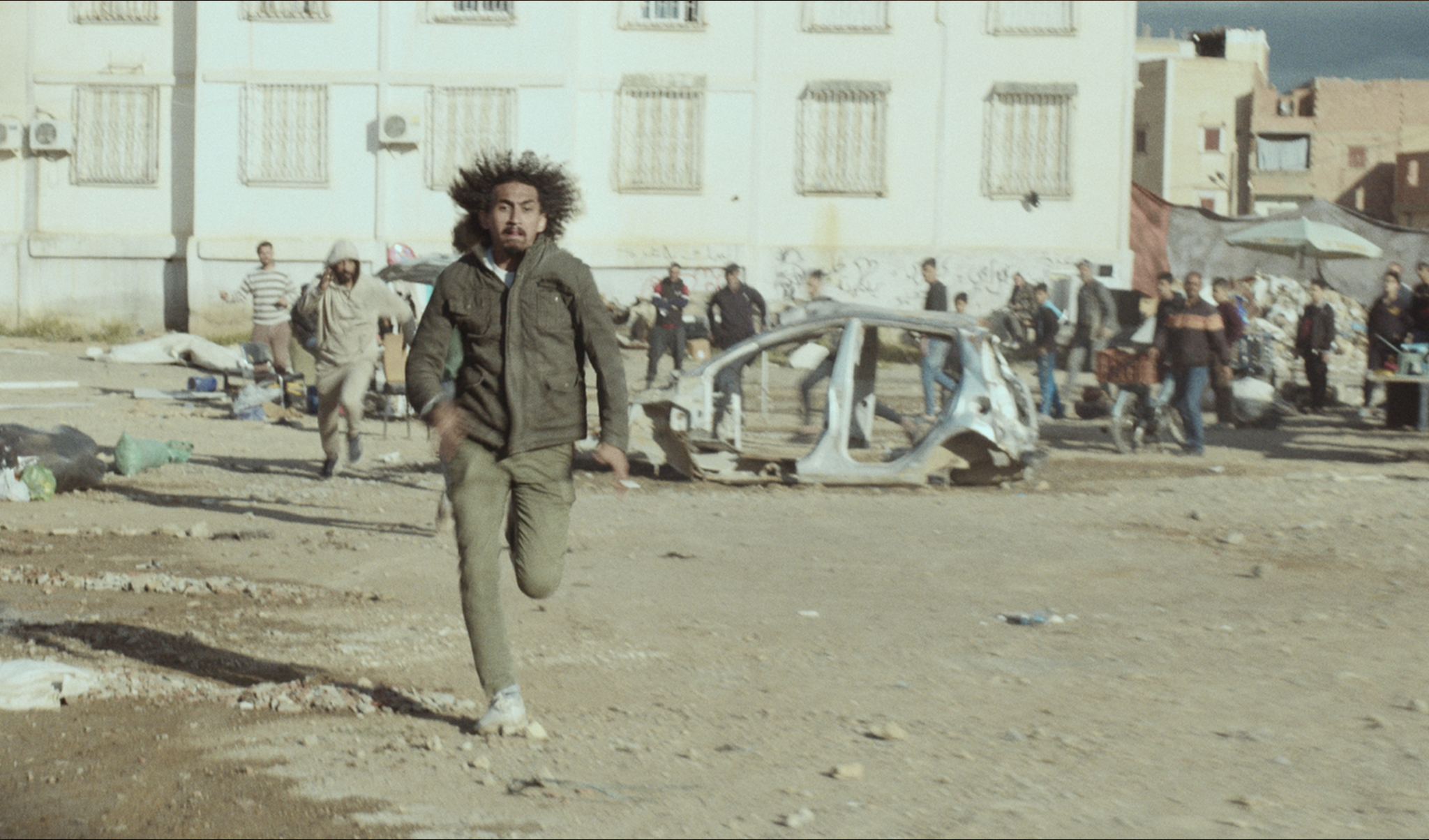
© Chronicles From the Siege (2026), film still.
Selected for the Debut Competition at the Sprouts Film Festival, Chronicles From the Siege (2026) by Abdallah Al-Khatib, seen by Liza Kolomiiets, offers an unsentimental portrait of Palestinian civilians trapped in a fictitious town under siege, where humour, intimacy, fear, and the need to document life persist amid hunger, violence, and uncertainty.
Some films about war present it through the lens of heroic actions, large scale, and monumentalism. Others lean into sensationalism, telling disturbing stories and showing horrifying images. Fewer films manage to depict life during war as it is, where ordinary people seek simple joys as much as they seek safety. Chronicles From the Siege by Abdallah Al-Khatib is one such film.
This debut feature clearly stems from Al-Khatib’s documentary Little Palestine: Diary of a Siege (2021), where the images of hunger and isolation are as important as attempts to maintain a sense of community. Chronicles presents itself as an assortment of five different yet related stories, each capturing the struggles of the siege from a different perspective.
“They cope with the nightmares of solitude, navigate complicated friendships, seek the brief comfort of a cigarette, attempt to find time for intimacy, and deal with complex moral dilemmas.”
The narrative follows several residents of a fictitious small Palestinian town isolated by war. They cope with the nightmares of solitude, navigate complicated friendships, seek the brief comfort of a cigarette, attempt to find time for intimacy, and deal with complex moral dilemmas. In documenting the siege from a human-centered perspective, Chronicles juggles awkward selfishness with altruism, shame with dignity, human weakness with resilience, without turning these contradictions into moral lessons.
It might seem like a lot for one film, yet Al-Khatib maintains the viewer’s attention through carefully orchestrated moments of tension and natural comic relief. Whether the characters deliver cheeky comments about each other’s capabilities, discuss sexual preferences, or find themselves in awkward situations familiar to anyone, the film’s unembarrassed honesty about human behaviour acts as its driving force.
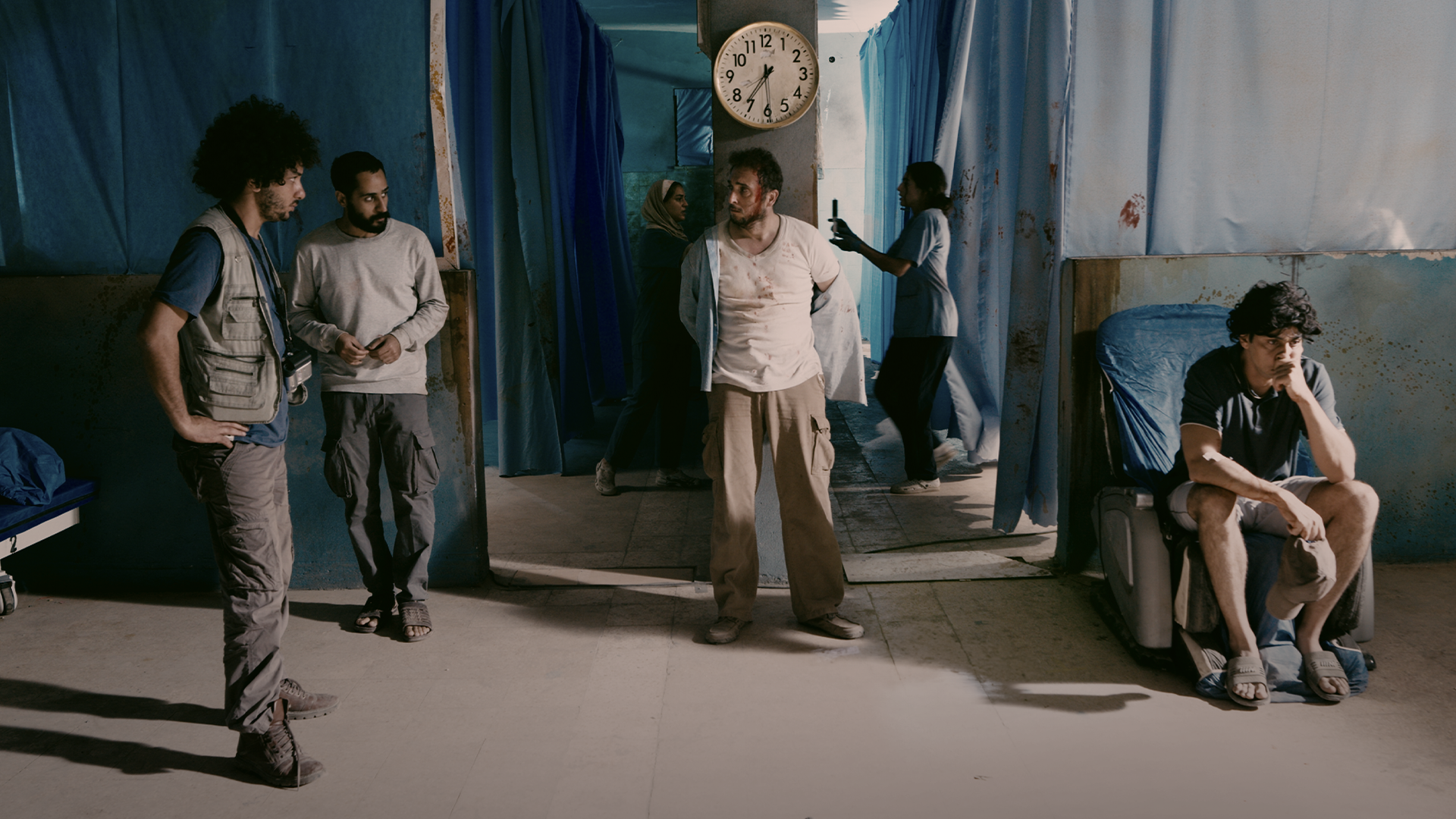
© Chronicles From the Siege (2026), film still.
Occasionally, the muted colour palette feels too insistent, reinforcing emotions that are already clearly present in the performances and writing. With support of the handheld camera, long takes, and grounded performances, Al-Khatib achieves the rawness and urgency necessary for such a story. The transitions between the film’s five narratives are particularly elegant, with visual clues, sound bridges, and thematic echoes allowing one story to flow into another. They become a reflection of the continuity of the siege that stretches across different people, spaces, and experiences.
The writing on the door of Arafat, the elderly character with a mental illness, states: “I don’t see my life outside the confines of the siege. And I don’t see an end to the siege outside of the confines of my life.” These conditions gradually transform from a temporary state of emergency into a condition through which every aspect of life is understood. Time feels suspended, plans remain indefinitely postponed, and even the smallest pleasures carry uncertainty. Yet, the most radical thing Chronicles does is allow its characters to remain ordinary. They cut each other’s hair when missiles fly over their heads, make love to the sound of sirens, or hustle around for one puff of a cigarette.
Even though Palestinians are constantly asked to prove their reality through documentation, the film refuses to allow the war to become the sole definition of its characters’ lives. When Yousseff (Samer Bisharat) insists, “What I am doing here is not less important, I am documenting,” the line clarifies Al-Khatib’s own approach — to preserve memory without victimisation.
“The camera records destruction, abandoned streets, and traces of violence, while also capturing fleeting moments that might otherwise disappear.”
Woven throughout the film, fragmented video recordings shuffle the position of observation and participation. The camera records destruction, abandoned streets, and traces of violence, while also capturing fleeting moments that might otherwise disappear. Through direct glances into the lens and repeated reminders of the camera’s presence, Chronicles questions what it means to witness a crisis from afar and how easily individual lives become lost behind statistics, reports, and headlines.
By the film’s closing moments, the movement that has carried the story forward finally comes to a halt. The ticking of a clock replaces the bustle of daily life, and a steady, unbroken shot lingers on a space emptied of people. The stillness feels less like closure than continuation, and for the first time, the film offers the viewer space to sit with everything that came before.
In a media landscape saturated with images of devastation, Chronicles From the Siege insists on looking at people before symbols. Long after the final frame, it is not the destruction that remains most vividly in memory, but the fragile, stubborn presence of lives that continued within it.
Chronicles from the Siege will be screened on June 7 Sprouts Film Festival at Studio K I 21.15.
Liza Kolomiiets is a Ukrainian researcher and critic based in the Netherlands, working across film, fine art, and media. Her work focuses on themes of displacement and exile, while her curiosity extends to a wide range of visual forms and artistic expressions.