The Language of Aftermath in Raspad
Sprouts Film Festival ‘26. eco classic
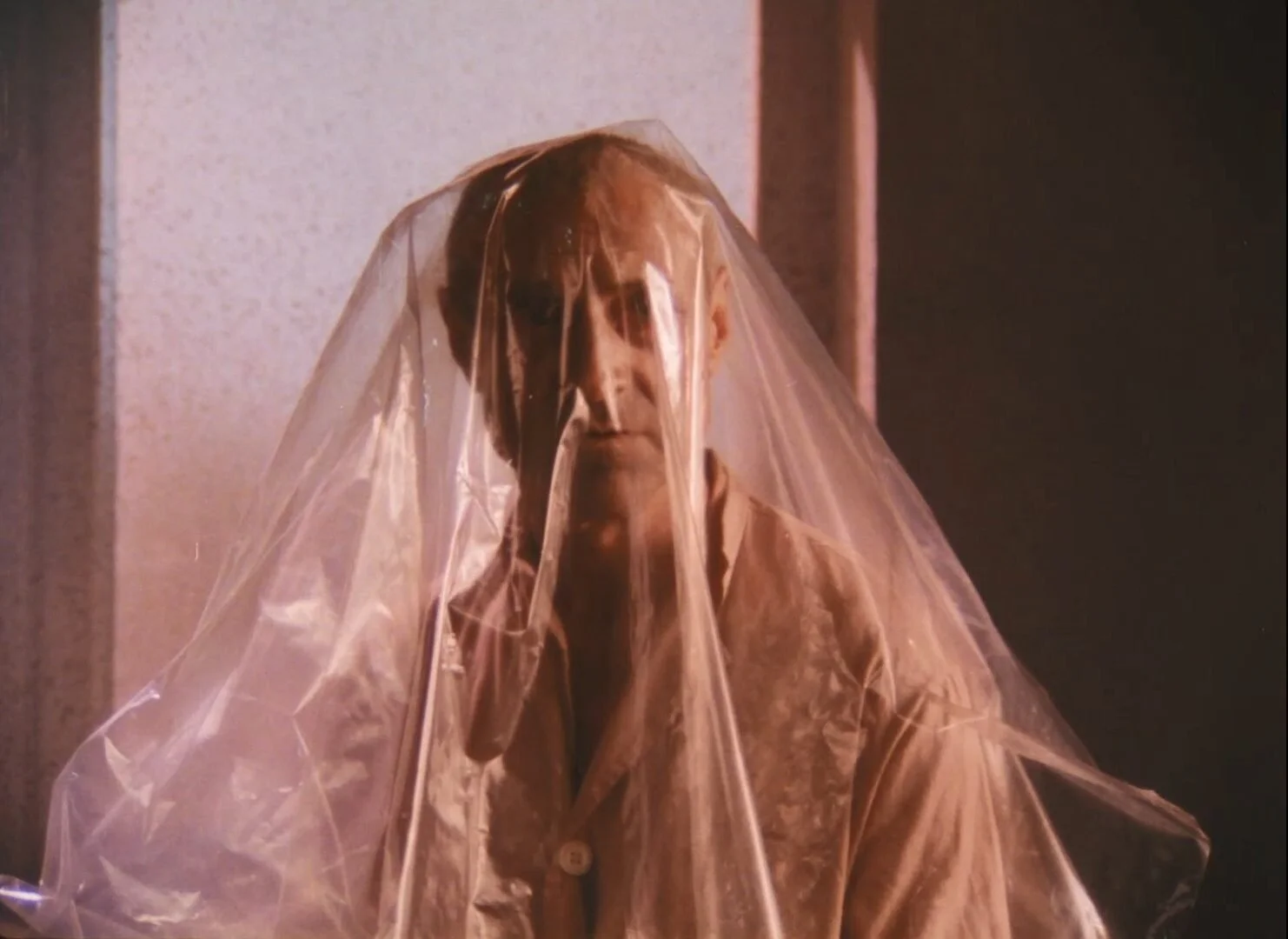
© Raspad (1990), film still.
As a part of Eco classics, Sprouts festival offered a curious, nearly forgotten gem of the Soviet era — Raspad / Decay (1990) by Mykhailo Belikov, watched by Liza Kolomiiets. The first feature film made about the Chernobyl disaster offers an enticing take on the human price of what remains the worst nuclear disaster in history.
‘We were told not to worry and drink red wine because it helps to remove excess radiation,’ said my mother, who was nineteen at the time, when I asked her about her memories of the 1986 Chernobyl disaster. This sentiment might sound strange now, since the repercussions of the nuclear explosion have been studied thoroughly for decades. Back then, however, very few people in Kyiv were properly informed about the extensive harm radiation might cause.
This lack of communication and transparency serves as a recurring motif throughout Raspad (1990). The film follows Kyiv journalist Aleksandr Zhuravlyov (Sergey Shakurov), whose ordinary domestic concerns — a possibly cheating wife or a demanding elderly father — are interrupted by the explosion at the nearby nuclear plant. As the catastrophe unfolds, Aleksandr and those around him are pulled into an event whose scale nobody fully understands yet.
Tracing the days following the disaster, Raspad avoids spectacular explosions and graphic depictions of suffering. Instead, Belikov focuses on the human consequences of catastrophe, braiding multiple fragmented storylines into a reality of havoc. A little boy becomes a symbol of the indirect and entirely unnecessary casualties. Young lovers embody a generation whose future suddenly feels uncertain. Aleksandr himself becomes a figure in a constant search for accountability in a world increasingly defined by confusion and denial.
Occasionally, the restoration quality becomes a nuisance with its shaky projection, visual artefacts, and audio static. However, once accepted as a part of the viewing experience, these imperfections begin to feel strangely fitting. Watching the damaged restoration feels like looking through a medium that has been contaminated. The visual and sonic disturbances reinforce the atmosphere of uncertainty surrounding the disaster and its aftermath.
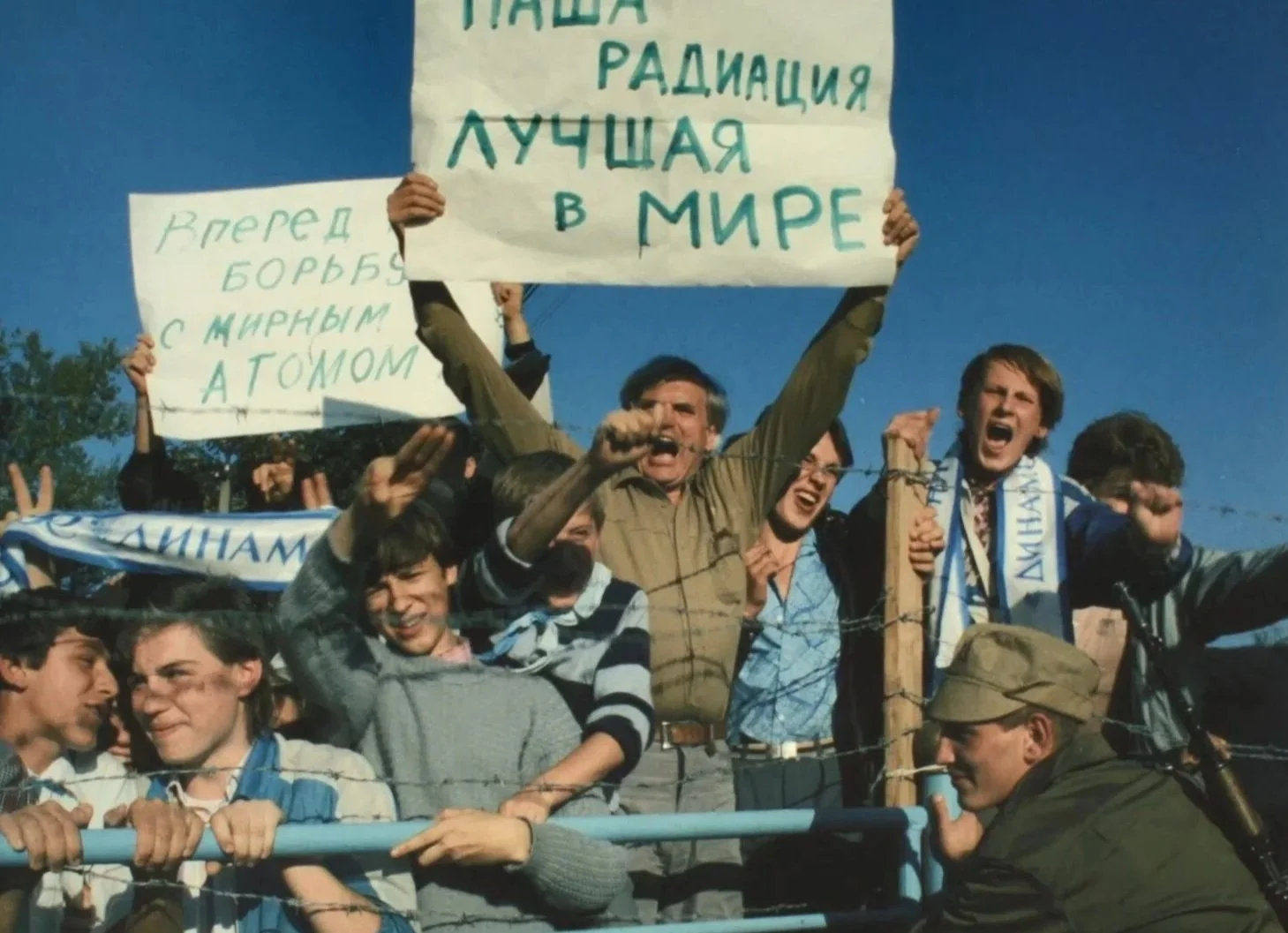
© Raspad (1990), film still.
Considering that Raspad was released in 1990, when the feeling of the Soviet Union falling apart was already in the air and budgets were tight, Belikov still delivers captivating cinematography. Complex bird’s-eye-view shots of abandoned buildings in Prypyat, radiation-infected forests and fields, and endless columns of evacuation buses communicate both the scale of the catastrophe and the scale of the silence surrounding it. Fisheye sequences during officials’ press conferences transform authority figures into participants of a grotesque performance, and slow pan shots, particularly toward the end, encapsulate a society trapped in stagnation.
The symbolism is often direct, but still effective. Recurring church imagery points toward a spiritual and moral crisis, whereas abandoned Lenin monuments stand as reminders of a political order already beginning to collapse. The recurring bicycle races, which continued to be broadcast during the real events, are particularly striking. They become a symbol of performative normality within the film, gradually exposing the absurdity of maintaining appearances against the backdrop of a global catastrophe.
One might wonder why Raspad is worth revisiting today, especially for viewers who do not naturally gravitate toward Soviet cinema and its grainy visual texture. The answer lies partly in the opening and closing song by Vladimir Vysotsky, perhaps the defining voice of his generation. Vysotsky's voice functions almost like a chorus, returning the film's questions to the viewer:
Oh, once, and again,
And again, many, many, many, many times,
And again...
Everything is not as it should be!
More than three decades later, the line lands with uncomfortable familiarity. The film’s portrait of half-truths, delayed responses, institutional denial, and public uncertainty feel remarkably and intimidatingly contemporary. Although different crises dominate today’s headlines, the mechanisms that shape public response often remain the same.
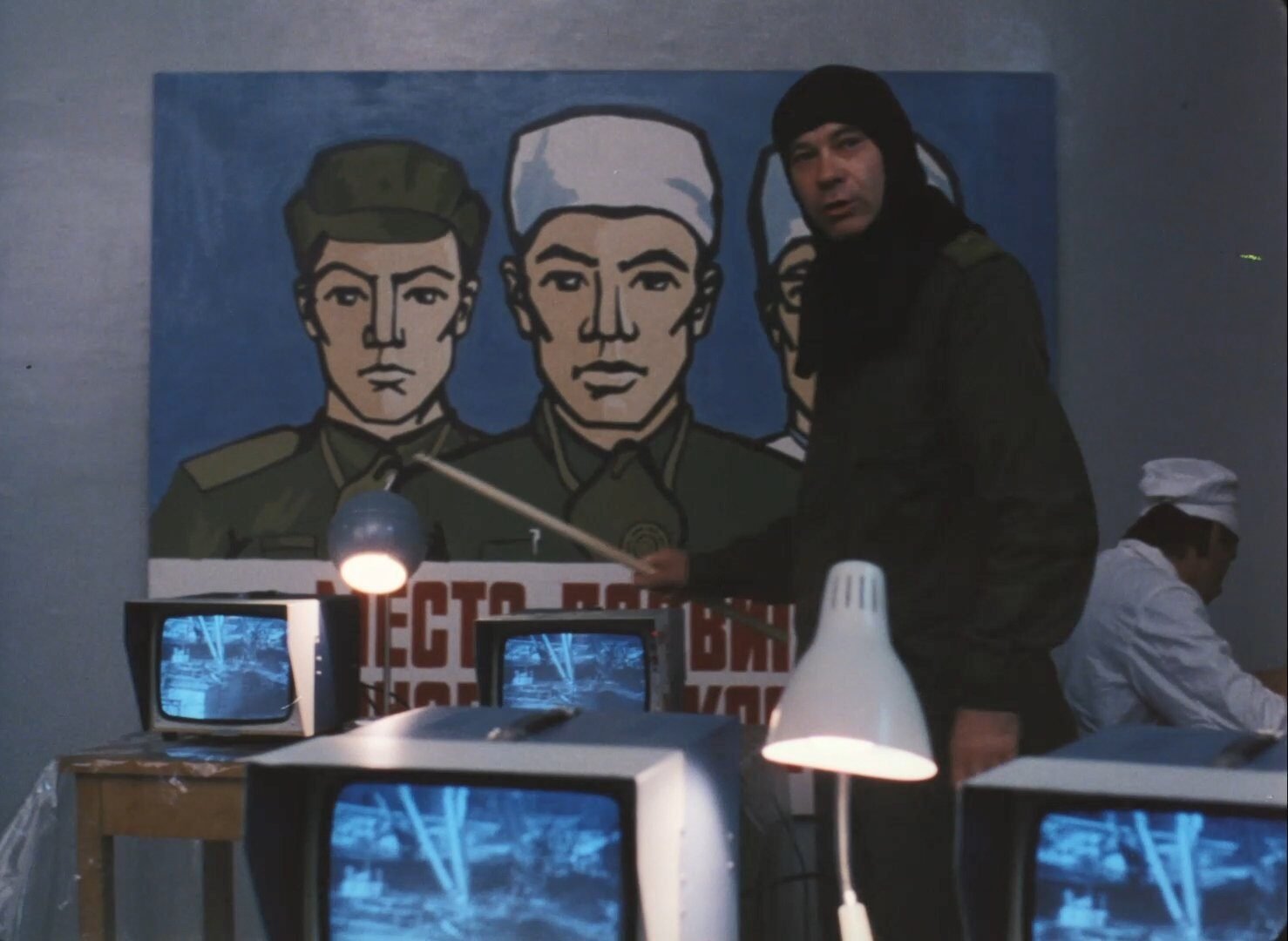
© Raspad (1990), film still.
In Aleksandr’s refusal to place responsibility solely on the state, his warning of history repeating itself unless something changes gives the film much of its lasting power. Just as in Raspad, people confronted with a crisis today often oscillate between panic, resignation, and helplessness. The film offers no easy solutions, rather suggesting that indifference carries a cost, and that communities share responsibility for how they respond when reality becomes difficult to face.
Initially, Raspad can feel overwhelming, much like the event it attempts to capture. Nonetheless, the chaos is precisely what makes it such a valuable document of its time and a compelling film for ours. The question Belikov leaves behind is whether we are capable of recognising it while it is still being denied.
Raspad will be screened on June 6th Sprouts Film Festival at Kriterion I 19:15.
Liza Kolomiiets is a Ukrainian researcher and critic based in the Netherlands, working across film, fine art, and media. Her work focuses on themes of displacement and exile, while her curiosity extends to a wide range of visual forms and artistic expressions.