Berlinale – The Painful yet Necessary Nuances of Homecoming in Geneviève Dulude-de Celles’s Nina Roza
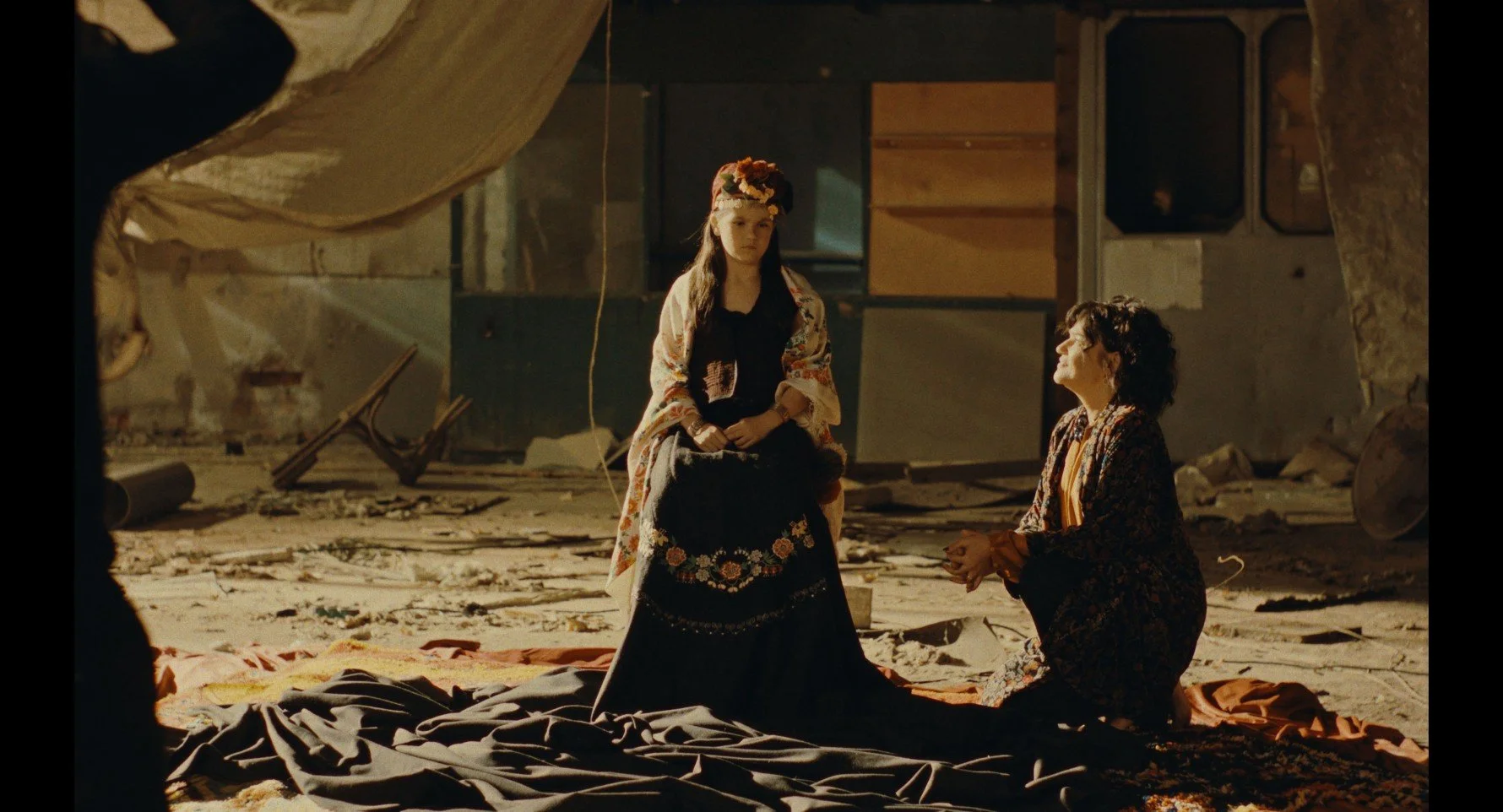
© Nina Roza, film still.
At this year’s Berlinale, writer Rashko Angelinov attended Nina Roza, the second feature by Geneviève Dulude-De Celles, a quiet yet piercing reflection on homecoming. The film follows a Canadian-based curator returning to Bulgaria after 28 years abroad, confronting loss, memory, and the unsettling feeling of becoming a stranger in one’s own homeland.
On the surface, Nina Roza (2026) addresses the obsessions of the contemporary art world, which, like other industries, have fallen victim to a capitalist system focused on individual benefit and financial gain. At its core, however, the film is about processing deep-rooted misery and the overwhelming wave of emotions that immigrants face when returning home, whether for the first time or after many years away.
After even a short time abroad — but especially after many years —the experience becomes overwhelming. The story is painfully relatable, depicting the dreadful fear one feels as the airplane approaches the land that was once home, as well as the profound sense of alienation that arises when confronted with a forgotten language, manners, and traditions that once felt natural and automatic.
“A foreigner in one’s own land” is exactly how Michail, the film’s central character (Galin Stoev), feels as he returns to his native Bulgaria, having fled during the final years of communism in the 1980s. He not only fled the repressive system and the hopelessness of communist Bulgaria, but also attempted to escape the pain of losing his wife, the mother of his child. For 28 years, Michail has convinced himself that he made this initial flight for the sake of his daughter (Michelle Tzontchev), providing her with a brighter future — one free from financial poverty and, more importantly, from a poverty of opportunity.
Michail’s work as a curator at an art gallery in Montreal, Canada, presents him with an opportunity to visit back for a couple of days in order to verify and purchase the paintings of an eight-year-old art prodigy (Sofia and Ekaterina Stanina) from a small Bulgarian village. The narrative moves back and forth in time as Michail attempts to win the trust of the young painter and her single mother. The more he “arrives” in Bulgaria — a place filled with memories and pain — the more he is forced to scrutinize his decision to leave and his refusal to look back. Never truly escaping, never fully arriving, the film interweaves past scenes of loss and flight with present-day interactions between Michail and his daughter. This in-between state portrays the immigrant struggle in a painful yet honest way.
There are two standout performances in the film. Galin Stoev, in the role of Michail, handles his feature film debut impressively, delivering a multilayered portrayal. His mostly quiet — yet at times unavoidably visible — discomfort and insecurity about being back in his motherland are perfectly conveyed through his expressive facial features and understated, almost faltering voice.
A more surprising performance comes from Svetlana Yantcheva as Michail’s estranged sister. She makes the most of her limited screen time in an intense, profoundly heartbreaking scene that collectively represents those who stayed behind. Yantcheva masterfully combines the immense hurt associated with losing someone who is still alive with the extraordinary relief of seeing that person suddenly appear at your doorstep.
Cinematographically, the film has several strong moments, particularly in its bird’s-eye-view shots of the autumnal Bulgarian landscape. Hugged by endless hills bathed in sunshine, the villages seem shielded from the ruthless pace of modernization in the outside world. The direction and camerawork capture the spirit of village life — its material simplicity and heartfelt hospitality. Complementing this visual approach, the color palette reflects both the locations and the emotions tied to them. Scenes set in Sofia, where Michail was born and raised, are gray and dimly lit, often unfolding at night amid the city’s restless bustle. In contrast, the village scenes are suffused with warm tones, illuminated by sunlight or firelight, and often accompanied by lively music.
The musical score plays a central role in Nina Roza, as it is of profound importance to its main character, Michail. The film’s most prominent and persuasive scenes unfold on the back of Bulgarian traditional folklore pieces, such as Ergen Deda, as well as national-treasure classics like Povei vetre and One Bulgarian Rose. The latter is considered an unofficial anthem for Bulgarians abroad, its lyrics painting a vivid portrait of a land of roses and its warm, welcoming people.
It is precisely this beautiful scenery that so many Bulgarians have left behind in pursuit of freedom and opportunity. After decades under an oppressive system, countless Bulgarians have come to equate the promise of freedom and opportunity with love and care. This is the key conflict that Nina Roza’s Silver Bear–winning screenplay superbly explores: What do care and love truly mean? Are they bound to a person, a partner, a child — or to a place? Can physical escape and the denial of past pain ever truly heal emotional wounds?
Between village and city, love and pain, belonging and estrangement, past and present, Nina Roza compels its characters to search for definitive answers. As the film unfolds, its message gradually crystallizes. Life consists of moments and phases at both ends of the spectrum, without clear right or wrong answers. What ultimately matters is having the courage to ask the question
Born and raised in post-communist Bulgaria, the search for my identity in my teenage years made me pick up the pen for the first time. Ever since, the questions of love, immigration, and home have defined my writing: the division of the heart & soul between two homes, the ever-present human quest for connection, the deep but delusional desire to have one single happy place. The deeply personal, the political and the societal are reflected in and shape my life into three pillars: reclaim connection, rerun the city, and rethink straight men. Next to my film review in Rephrase, my short stories and opinion pieces have been published in kaffeeundkippen, frank berlin, and zwischentext.