IFFR — Unerasable by Socrates Saint-Wulfstan Drakos Is a Video Essay on Memory and Repression
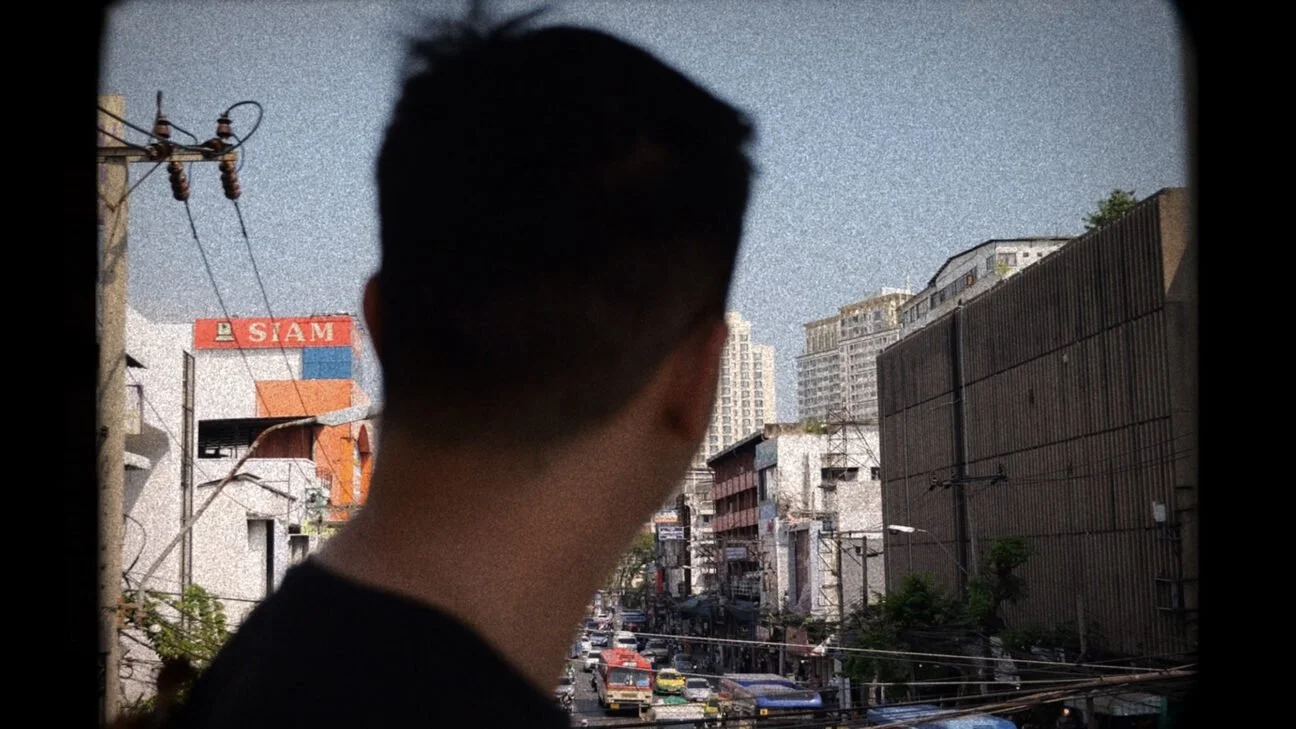
During IFFR, Gijs Suy watched Unerasable (2026), a striking Belgian/Thai/Swedish production that explores political exile, memory, and the fragile boundary between anonymity and visibility.
Unerasable (2026) is a highly unusual film, as both its filmmaker, Socrates Saint-Wulfstan Drakos, and its protagonist, CP, use names that conceal their true identities. This choice is inseparable from the film’s sensitive political subject matter. It follows the life story of Vietnamese filmmaker CP, who was forced to flee his home country because of his political stances — first to Thailand and later to Sweden.
Rather than dramatising CP’s life, the film adopts a form closer to a video essay, with CP himself serving as narrator. Just like his name, his face remains anonymised.
The urgency of CP’s story feels undeniable in a world where autocracies are on the rise. Yet despite its political relevance, the film never turns into a pamphlet. What stands out is how Unerasable approaches memory — and the way repression reshapes it — through its formal choices.
The film makes extensive use of found footage, drawn from a wide range of sources: classics from film history, newsreels, propaganda from the Communist Party of Vietnam, and fragments of CP’s own films. At times this serves a pragmatic purpose. When CP recounts being tortured, scenes from a black-and-white Hollywood film are used to visualise the experience.
However, Unerasable goes beyond mere illustration. It embraces a layered, occasionally abstract found-footage method. The Hollywood torture scenes, for instance, are permeated with images of abstract forms — possibly a metaphor for the erosion or distortion taking place within CP’s memory.
Another interesting dimension of the film is its exploration of anonymity. The paradox is central: CP remains incognito, yet refuses to be silenced. This tension runs throughout the film.
One slightly whimsical but effective visual reference appears in a nod to Better Man (2024, Michael Gracey), in which Robbie Williams is portrayed as a CGI monkey — a metaphor for his alienation from others, combined with a longing for recognition. Another way in which Unerasable visualises anonymity is by using animations: a key motif is an animated circle that covers up CP’s head, but also visible on the opening and end credits. Interesting about this motif is its constant rotation — as if CP’s concealed identity is something dynamic and everchanging.
Although CP’s true identity is never revealed, his vibrant and outspoken personality unmistakably comes through. The same can be said for Socrates Saint-Wulfstan Drakos: even behind layers of mediation and anonymity, both filmmaker and protagonist remain unmistakably present.
Gijs Suy is a Belgium based freelance film critic who has published for outlets such as cineuropa, yanco, zippy frames, the low countries and Eastern Kicks.