IFFR – Rhythm as Resistance in Hugo Salvaterra’s Meu Semba
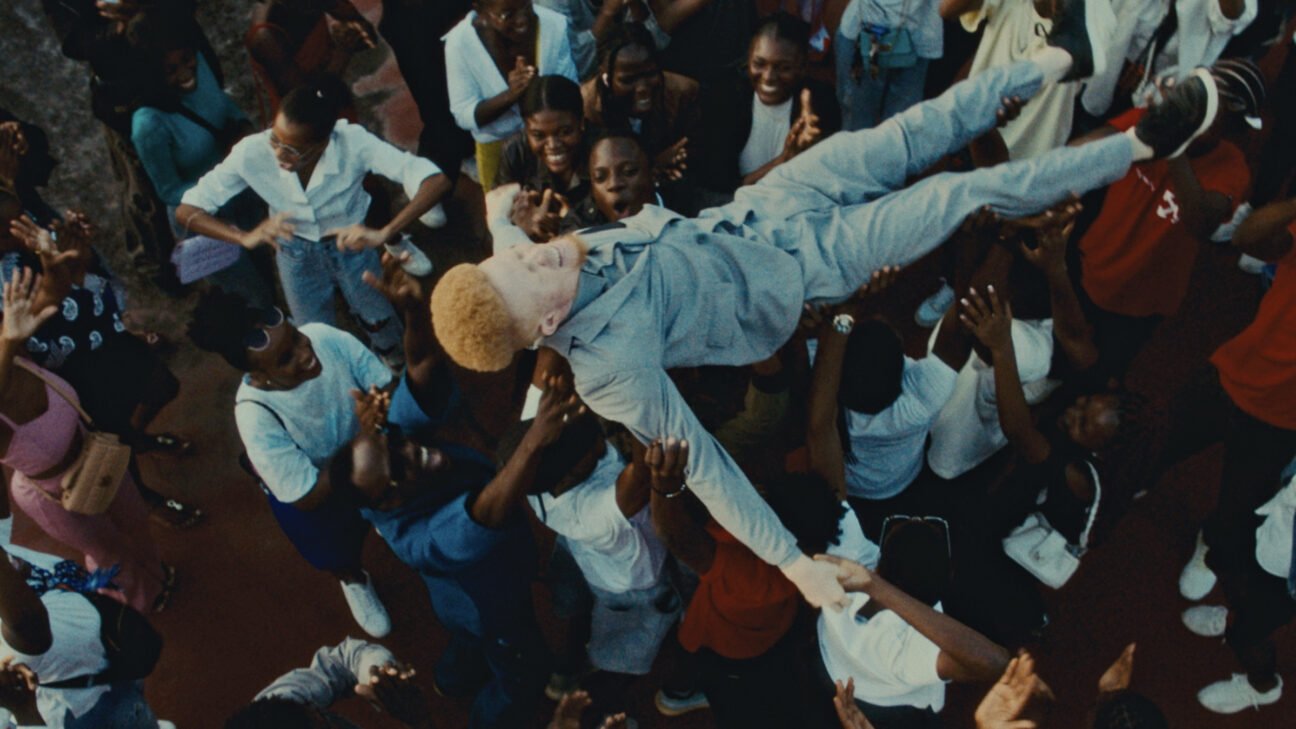
© Meu Semba.
Anne Karam watched Meu Semba (My Semba) by Hugo Salvaterra during the International Film Festival Rotterdam, where its rhythmic urgency and political charge stood out within a programme attuned to socially engaged cinema.
In Hugo Salvaterra’s Meu Semba (literally “my poem”), we follow X, a young albino man resisting life in Luanda, Angola. Alongside his foster siblings Lele and Maria, he grew up in a church’s orphanage, raised by Father Jonas. The three characters tackle the realities of everyday life in the Angolan capital, wrestling with questions of race, gender and class. Each character is plagued first and foremost by economic insecurity - X as an invisibilised essential worker, a cleaner in a hospital, Lele as a gig worker tempted by criminal recourses to money and Maria as a hotel housemaid, facing sexual harassment daily from her white manager.
Rather than constructing a tightly plotted narrative, Meu Semba moves through rhythm and repetition. The film functions, in many ways, as a musical. A constant score accompanies the loosely plotted story, while X regularly breaks into poem, spoken word and rap. The characters explore their disillusionment with their life and with the state of Angolan politics through rap battles at the CCP (Clandestine Poetry Club). Dialogues often teeter between conversation and spoken word, infusing the film with a constant sense of flow and rhythm.
The film delivers powerful messages around identity and activism. It considers religious preaching and poetry/art as two sides of the same coin. X raps “I rhyme to find myself.” He understands, through the help of Father Jonas, that “the role of the artist is to make sense of the pain.” In the climax of the film, X and his friends compete for 1 million kwanzas on a national television show. The group, “X and the Anonymous”, delivers a powerful personal and emotional political manifesto, making sense of what it means to be a young person — man or woman, able-bodied or living with a handicap — in Angola today. Carrying the weight of corruption, economic insecurity, war and trauma, the youth feel abandoned by their government: they rap “with an oil monopoly there is no freedom.”
While Meu Semba shines most clearly in its musicality, certain editing choices, specifically repeated, extended slow motion shots, play into an excessive melodrama that weigh down the overall experience of the film. The vision and cinematography are self-assured for a debut feature, with a beautiful palette of colours that showcase the diverse and stunning landscapes of Luanda.
“Semba is people.” Father Jonas preaches that there are only two feelings in life: fear and love. And we must choose love – whether through God or art. Meu Semba tells us that the important thing is to find your voice and to use it, because hope must prevail. The film dares to believe in the radical act of finding happiness despite poverty, despite misfortune. Meu Semba is Salvaterra’s poem to everyone about resistance, and finding hope through art; a film about youth, activism and hope, and the power within each of us to enact change.
Anne Karam is an Amsterdam-based writer, photographer and film enthusiast. Bringing forth an eclectic perspective with her roots in Lebanon, Canada, and France, Anne loves to engage with and write about cultural criticism from a feminist angle and act as a cultural curator to her friends.