IFFR — Mariia Lapidus’ The Second Skin on Silence, Trauma, and Shared Responsibility
© The Second Skin.
After Mariia Lapidus won the Tiger Short Competition at the International Film Festival Rotterdam 2026, Stefanie Gordin spoke with her about The Second Skin (2026). In their conversation, Lapidus reflects on where the film began, how it slowly took shape through a collective process, and the responsibility that comes with working with testimonies of sexual violence.
When Mariia Lapidus speaks about The Second Skin, it is immediately clear that the film did not emerge from a single moment of urgency, but from something that had been quietly present for a long time. “It wasn’t a linear journey. It was always with me. The desire to break the silence,” she says. That silence, she explains, became impossible to ignore when she discovered, almost back to back, that two women she knew had been raped years earlier. Neither had ever spoken about it. At the same time, she realised that she herself had never spoken about her own experience either.
What struck her most was not only the violence itself, but the way it was withheld. “Even with female friends, even with people you’re very close to, we don’t speak,” she says. “Because of how patriarchal society urges us to see these experiences as shameful, as something dirty.” If silence existed even within intimacy, she began to wonder what that meant for everyone else. The Second Skin became an attempt to sit with that question rather than resolve it.
The process of making the film unfolded slowly, deliberately resisting urgency. Over the course of more than a year, Lapidus gathered stories from women, without pressure or expectation. Sometimes it took months before someone was ready to share. “We would just meet for coffee,” she recalls. “We talked about everything except that. And then, little by little, they were ready.” For her, the act of sharing itself already carried meaning. Something was happening there, even before a film existed.
In addition to these private conversations, Lapidus also drew from anonymous testimonies shared on online support forums, where women documented their experiences of sexual violence. These accounts expanded the scope of the film beyond personal proximity, while preserving the anonymity that many women needed. Together, these voices formed the ethical foundation of the project.
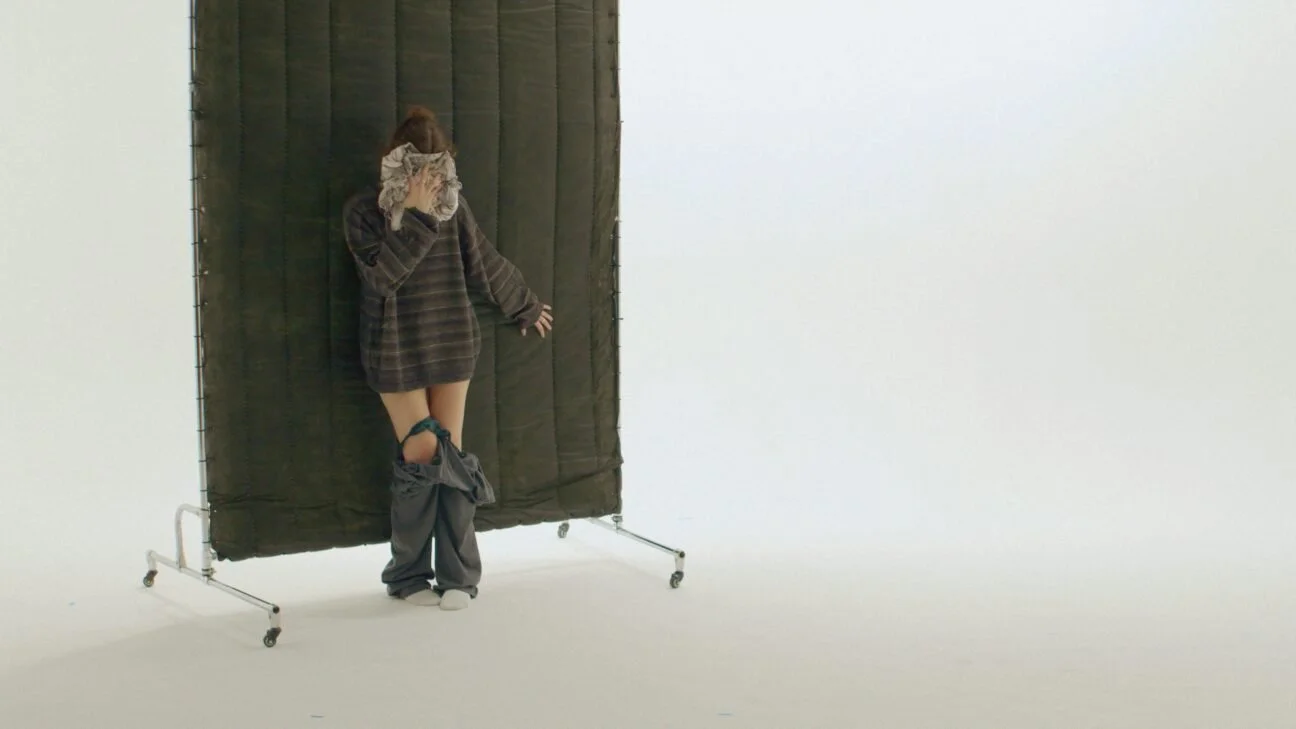
Because many of the women wanted to remain anonymous, Lapidus knew their stories could not be presented directly. She turned to reenactments — not as a way of recreating violence, but as a way of questioning representation itself. As an artist, she felt a responsibility to put her own body on the line. “I was ready to put myself out there,” she says. “And then I reached out to other women, and it became a collective effort.”
© The Second Skin.
Reenactment as care, not spectacle
What interested her most was the growing numbness surrounding images of violence. She speaks about desensitisation not as an abstract concept, but as something deeply felt. “There is so much research showing that constant exposure to violent images lowers our sensitivity,” she explains. “I kept thinking: how do we break that emotional block?” Rather than showing violence more explicitly, The Second Skin does the opposite. It dissects its own making, allowing moments of rupture and reflection to interrupt the flow.
In one scene, an actress performs an intensely violent reenactment. Immediately after, she steps out of it, questioning the scene, almost casually. “Should I do it again?” she asks. That shift, from horror to distance, mirrors something Lapidus recognises in herself and in audiences. “Sometimes we feel nothing,” she says. “And maybe that’s exactly the moment when we should ask why.”
Laughter appears unexpectedly throughout the film, not as relief, but as a coping mechanism. Lapidus admits she laughs often when things become unbearable. “It’s ridiculous,” she says, “but it’s real.” That complexity, where horror and humour coexist, became essential. The goal was never to dictate emotion, but to provoke awareness of how emotions function, or fail to.
Ethical care shaped every stage of production. After the first reenactment day, the team realised how heavy the process truly was. From then on, conversations became non-negotiable: before and after each shoot, they checked in. If something felt like too much, filming stopped. Shooting days were kept short and spread out over time. “We had to give all of ourselves,” Lapidus says, “but also protect each other.”
© The Second Skin.
A collective process of trust
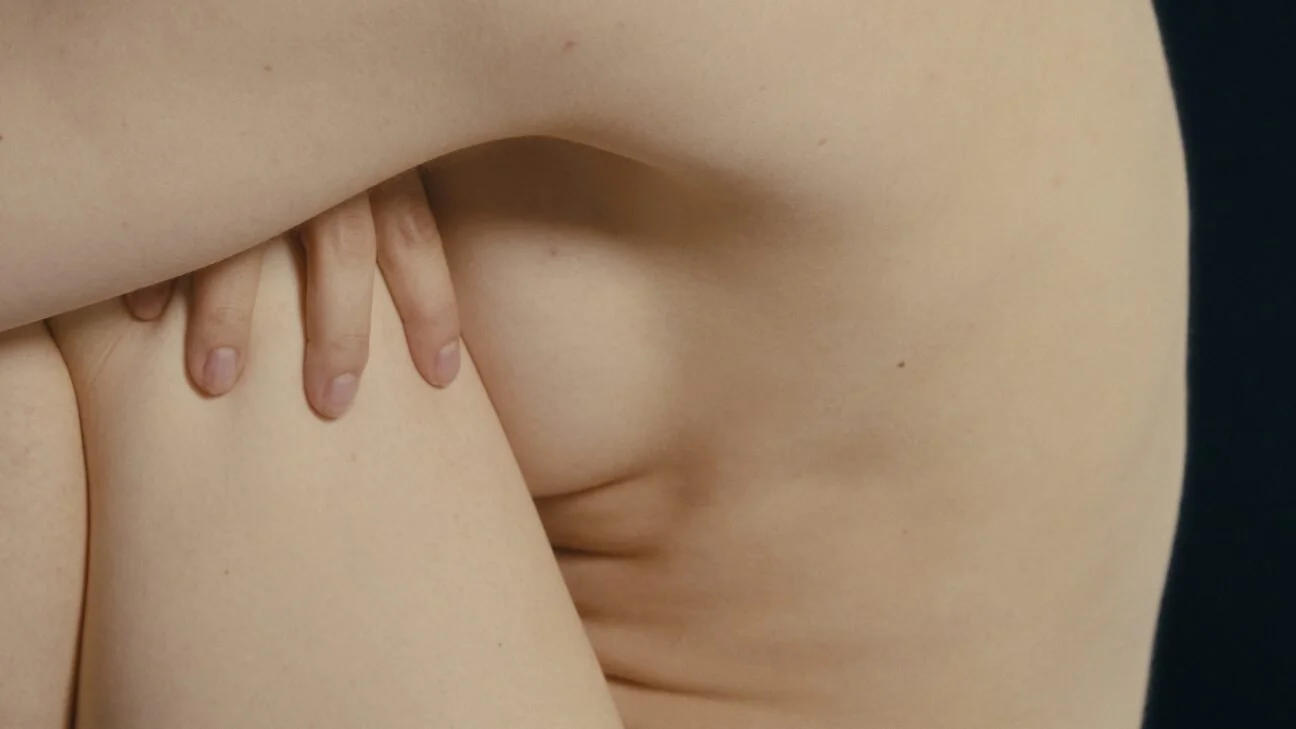
The visual language of the film emerged through dialogue. Together with cinematographer Lera Vethkhova, Lapidus discussed distance and perspective, eventually choosing a detached, almost clinical overhead framing that would be applied consistently throughout the film. What began as an idea for a single scene became a shared decision to shape the entire visual approach. “That shift changed everything,” she recalls. “It allowed us to look without intruding.”
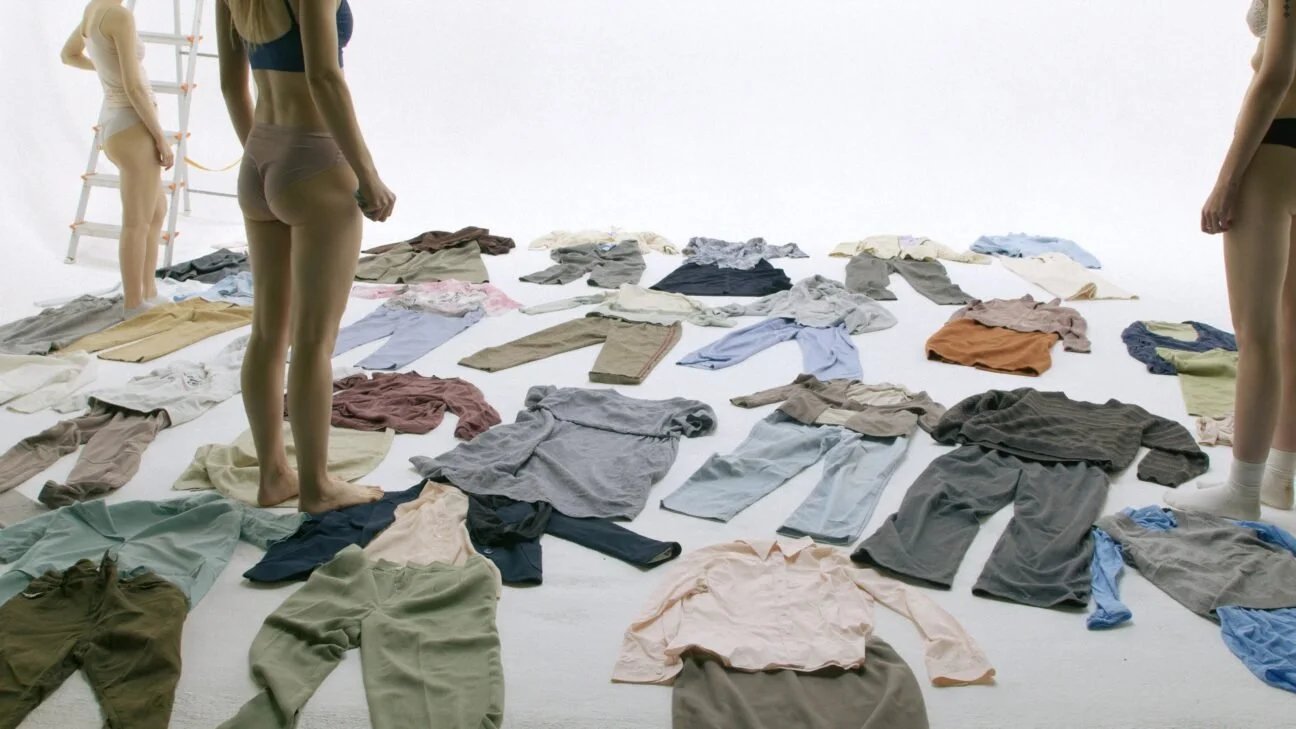
Animation was carefully conceived from the very beginning. When Lapidus first developed the idea of reenactments, she also articulated the concept of clothing as a second skin — silent evidence of violence — alongside the idea of “broken” stop-motion. The inspiration came from a woman who was raped in a park and kept the clothes she was wearing sealed in a plastic bag for years, unable to wash or discard them. From early on, Lapidus had a clear vision: clothes moving across asphalt, buttons unfastening, fabric tearing apart, the ground itself breaking.
What remained open was how these ideas would translate into physical materials. That process took shape through close collaboration with Margo Shkalina — animator, production and costume designer, performer, and a close collaborator on the film. Together, they found a tactile language that allowed the animation to feel fragile, unstable, and bodily, mirroring the tremor of memory under trauma.
Throughout the shoot, care extended beyond the frame. The team checked in constantly, adjusted schedules, shortened shooting days, and allowed space for rest. Laughter, hugging, and moments of lightness were not distractions, but necessary counterweights. “We couldn’t survive the heaviness without them,” Lapidus reflects. The process demanded emotional involvement, but never at the cost of safety.
During editing, the responsibility deepened. Lapidus worked alone, but remained in constant contact with the women whose stories informed the film. “Whenever I doubted something ethically, I reached out to them,” she explains. “These are their stories. Who else should decide if something is okay?” Cuts were shared, consent reaffirmed. The project slowly transformed into what she describes as a support group. One that extended beyond the screen.
Visual choices emerged directly from the testimonies. One woman spoke about the clothes she was wearing when she was raped, how she couldn’t wash them, but also couldn’t throw them away. They remained sealed in a plastic bag for years. That image stayed with Lapidus. Clothes became silent evidence in the film, placed within urban spaces that echoed the stories. Animation, fragile and broken, was introduced to convey the tremor of a body overtaken by trauma. “It had to feel unstable,” she says. “Like reality itself was shaking.”
When the women finally saw The Second Skin, their responses were marked by complex and intense emotions. Lapidus recalls the words of one woman whose story is reenacted in the film: “Speaking about the violence didn’t heal me, but it was something else, much better than silence.”
What began as an attempt to make violence visible gradually shifted into something else: community. “At first, it was about experiences,” she reflects. “Then it became about being together.” The film does not offer closure or resolution. Instead, it insists on presence – on staying with what is difficult, on speaking the unspeakable, even when language falls short.
Winning the Tiger Short Competition marks an important moment for Lapidus, but The Second Skin resists the idea of arrival. It exists not as an endpoint, but as an opening: a space where silence is challenged, numbness is questioned, and connection, however fragile, becomes possible.
Stefanie Gordin is a writer, journalist, and co-founder of Rephrase Magazine.
