IFFR — Tragicomic Horror and Moral Decay in Aitore Zholdaskali’s Sicko (Auru)
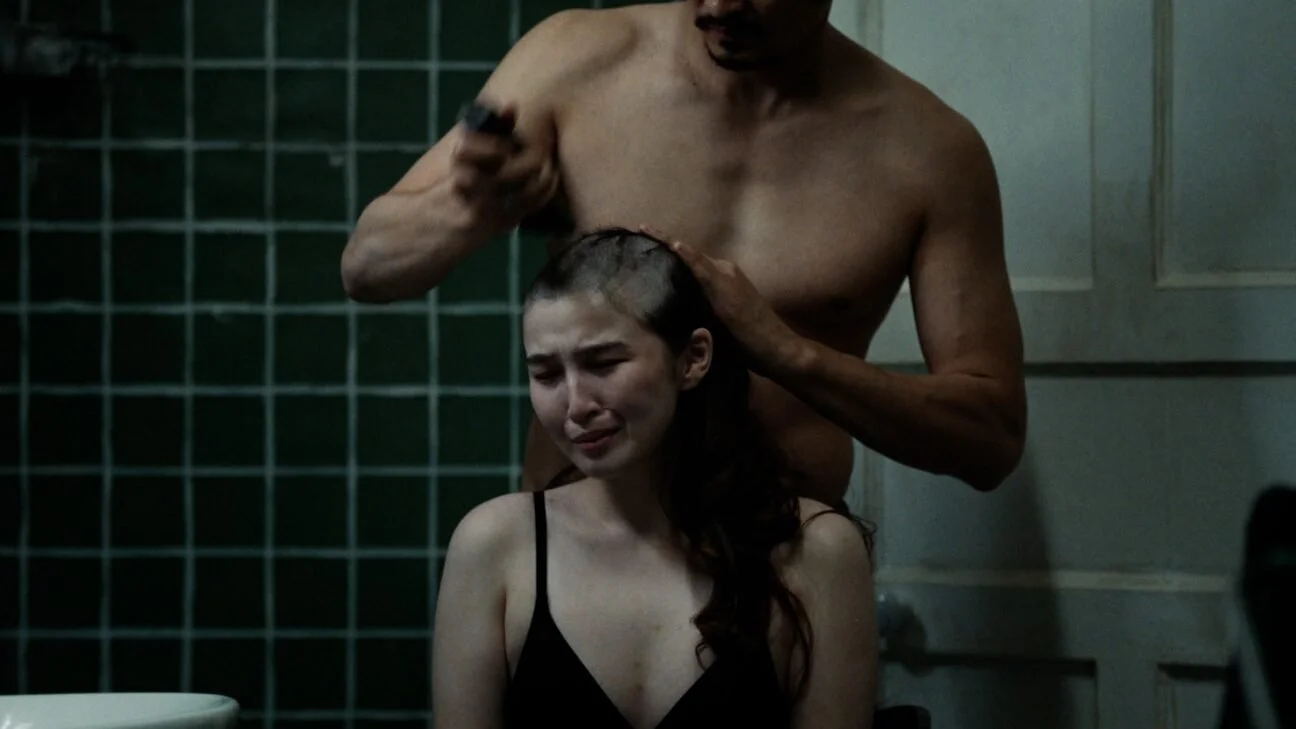
© Sicko (Auru), film still.
At IFFR, Liza Kolomiiets watched and spoke with the Kazakh director Aitore Zholdaskali about his feature debut Sicko (Auru), which blends grotesque violence, stylish visuals, and biting social satire, revealing a filmmaker unafraid to explore human ugliness and the strange allure of its spectacle.
“I like to describe a film like a person. For me, Sicko is a sick, dirty, and very unpleasant person, but he listens to cool music, and he has taste,” said Aitore Zholdaskali about his feature debut at IFFR. This description sharply captures the first impressions the film leaves.
Sicko tells the story of a Kazakh couple—Azamat (Ayan Utepbergen) and Tansholpan (Dilnaz Kurmangali)—who are drowning in debt. Thanks to a series of unfortunate events, they come up with a “brilliant” idea to fake a terminal illness and create a crowdfunding campaign that goes viral. From there, in true tragicomic-horror fashion, their lives rapidly spiral downward.
“In the hues of lurid green and pale purple, the story becomes a character study of a sickness that is more mental than physical.”
Sicko combines gruesome and bloody scenes that make even an experienced horror lover squint at times, while wrapping it all in crisp, stylish visuals. In the hues of lurid green and pale purple, the story becomes a character study of a sickness that is more mental than physical. There, volunteers terrorize the sick and elderly, the big bosses orchestrate ethically grotesque deals, and the loving husband slowly transforms into a violent monster.
The original score made by Sultanali Kongyratbay supports this portrayal of decay with its pulsating beats and overall ambient sound. At times, it also manages to help release the comic tension, of which there is plenty. In one of the catchiest scenes, unexpectedly but quite fittingly, Gorillaz’s ‘Feel Good Inc.’ makes an appearance and even briefly steals the spotlight.
In moments like that, Sicko walks a very fine line between a music-video–styled commercial film (with all the zoom-ins and zoom-outs) and a festival genre film. The background of the filmmaker who started his career as a music video director most likely plays a role in that. However, as the film openly embraces the ‘cinema of attractions’, it still falls into the category of entertaining rather than exhausting.
“Sicko is an unapologetic fun ride, portraying the harsh realities that might be more recognizable to those who come from the post-Soviet spaces.”
Though not extremely explicit, the film also brushes against the critique of late-stage capitalism, domestic violence, and religion. Sicko is an unapologetic fun ride, portraying the harsh realities that might be more recognizable to those who come from the post-Soviet spaces. Yet, with a well-rounded plot and emotionally compelling protagonists, the story remains accessible to a wider audience.
Perhaps one of the most interesting components of the film is its director, with a strong philosophy many young artists could learn from.“My advice is do not ask advice, but go and try it instead,” says Aitore, who strongly believes one of the crucial skills of a director is to bear responsibility and make difficult decisions.
Without initially aiming to conquer international audiences, he made a film about a local Kazakh story the way he envisioned it, despite governmental restrictions and a rather small budget. Sticking to his artistic vision, he assembled a team based not only on skill sets, but also on shared principles and beliefs.
According to Aitore, this way he ensures that each team member brings a vision that enhances his own. Meticulously crafting a sinister diegesis, he exposes certain uncomfortable and traumatic aspects of life without judgment, but with a strong desire to study them. He positions himself as a mediator of stories and characters, driven by a desire for personal and artistic growth.
“Work more on yourself than your work,” the director shared. “If, as a person, I am stronger mentally, spiritually, and skillfully, then I can handle it all.” In Aitore’s view, comfort is something to beware of, as it might create a mental cage that is hard to get out of. What might seem like a huge win and the end of the race is, in reality, only the beginning.
His selection for IFFR’s Bright Future section feels fitting: Zholdaskali emerges as a filmmaker with a bold visual instinct and a willingness to confront moral ugliness head-on. These are definitely the qualities that make his future work worth watching closely.
Liza Kolomiiets is a Ukrainian researcher and critic based in the Netherlands, working across film, fine art, and media. Her work focuses on themes of displacement and exile, while her curiosity extends to a wide range of visual forms and artistic expressions.
Sicko (Auru) will screen again at IFFR on Thursday, 5 February 2026, from 16:30 to 18:17, at de Doelen – Willem Burger Zaal.