IFFR – The Never-Ending Feeling of Unbelonging in Stefan Koutzev’s debut
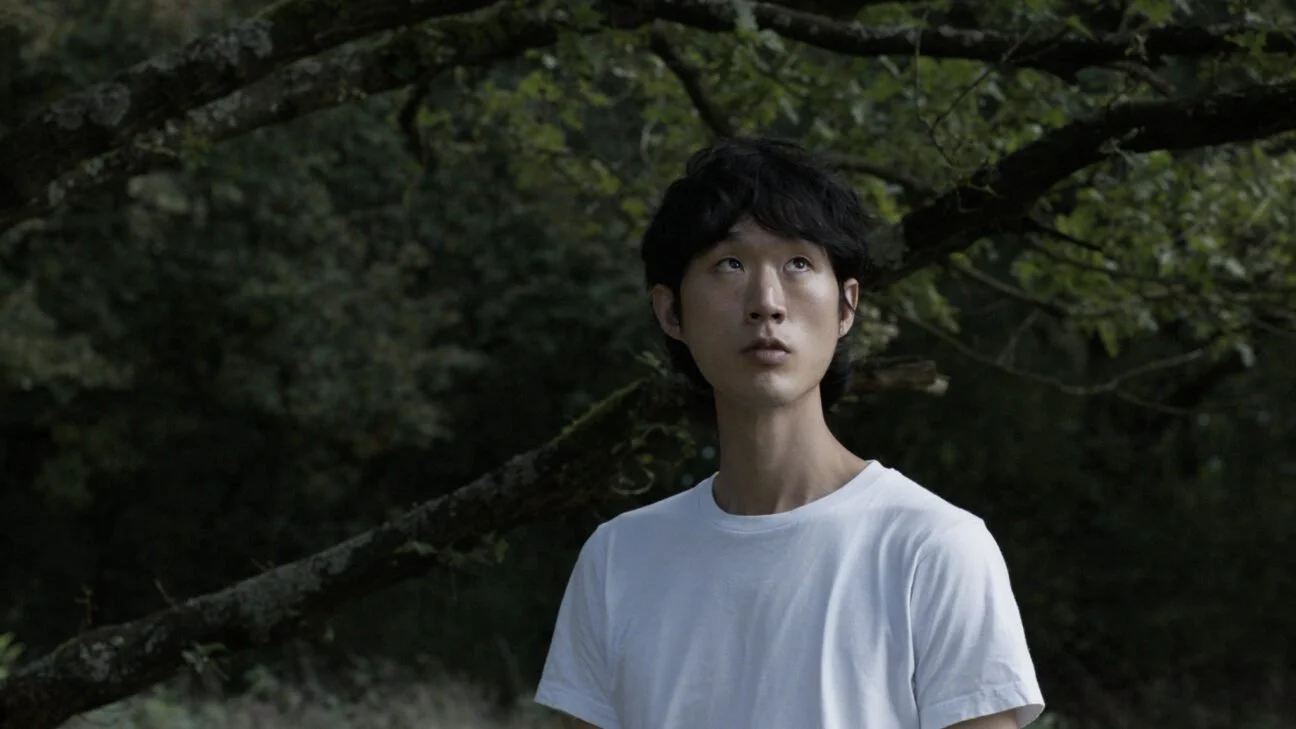
© Why Hasn’t Everything Disappeared Yet.
During IFFR 2026, Hava Masaeva watched Why Hasn’t Everything Disappeared Yet, Stefan Koutzev’s debut feature on stillness, displacement, and being elsewhere.
Films that try to do less, very often speak more. They know who they’re addressing, and they somehow always find their way to those people. The same thing happened to me with Stefan Koutzev’s Why hasn’t everything disappeared yet, which premiered at the International Film Festival of Rotterdam (IFFR) 2026, in the Bright Future section.
This debut fiction feature of a director unknown to me before, seemed to have been looking for me, and perhaps I was looking for it as well. It feels like sitting down on earth and seeing the world spinning around you, and as you passively watch it, you’re unsure if you have the right seat.
The 98 minute film opens with an intimate dialogue in Bulgarian. Two children, seemingly siblings, are on a bus that is going in the wrong direction. ‘”I think we are on the wrong bus. All the plates are for Köln.” Cologne. They were supposed to go to Cologne. After this one scene, the children never return to the screen. The ‘actual’ story starts, but what happened before lingers. Koutzev himself happens to be a native Bulgarian, living in, well, Cologne. Was this the director prequelling the fictional story with his own non-fictional story?
“The camera doesn’t move. Two takes, one conversation. Stillness. Their conversation is simple, easy, silent, laid back.”
It immediately sets the personal tone of the film. Cut to two young men in an art studio, talking about how they feel lost at times, living in Germany as Koreans, missing the food at home. The camera doesn’t move. Two takes, one conversation. Stillness. Their conversation is simple, easy, silent, laid back. They’d both been in the army, they share. Long silences at times, little intonation in their voices. I notice immediately how Sori doesn’t ask the questions. He’s gets asked them, all he does is reply.
In just a few sentences if possible, a little bit more if needed. He doesn’t share too much, only as much as is required. The reserved voice of someone who feels like a stranger everywhere, even when he is in the same room as someone who is supposed to make him feel a little bit more at home. Perhaps that is exactly when he feels like a stranger the most, because it reminds him of who he is, while simultaneously creating a distance between him and the place he is trying to adapt to.
“He wanders around, draws, talks to strangers. Running into himself, as a stranger everywhere.”
Why hasn’t everything disappeared yet is serene. Little happens on screen, as most is happening inside the main character. Sori’s reserved attitude speaks volumes as he navigates himself through his quiet life in Germany, having moved there for his studies, but now being a college drop-out, unbeknownst to his parents back home in Korea. Why is he abroad? What is he even doing there? He wanders around, draws, talks to strangers. Running into himself, as a stranger everywhere. All shots are still, most of them each lasting at least a minute or two. It seems as if each scene was shot without knowing what the next would be, perfectly capturing that confused, strange feeling inside Sori. What will be next? It could be anyone, anywhere, as every place feels as little like home as the last one.
As a Chechen living in Belgium, this is a feeling I have been running away from for my entire life, only making it worse by later moving to The Netherlands. A stranger anywhere, even at places where there are people like me. Wondering why I’m here, and not at home. But where is home? We watch the world quietly pass by. We are being lived. The questions are asked to us, we simply answer them, as precise and short as possible.
This reminds me of the character of Anna in Chantal Akerman’s tranquil Les rendez-vous d’Anna (1978), who wanders around Brussels and replies to most questions with ‘oui’, nothing more, nothing less. As much as is needed. Strangers and friends pass her by, yet it is unclear what any of those people actually mean to her. It just happens. These people appear, then they disappear. Anna and Sori just watch it happen. I watch with them.
As the credits roll, I come to the conclusion that indeed, that little boy on the wrong bus talking to his sister in the beginning of the film, must have been Koutzev himself. On his way to Cologne, probably not really knowing why.
Hava Masaeva is a film scholar currently living in Amsterdam. She recently graduated with a Masters in Filmstudies and Visual Culture and now works as a film programmer and projectionist at Filmhuis Cavia, alongside working at Cineville. In her film curational work, she focuses on film from the (North) Caucasian region, as well as forgotten classics. She is currently in the early stages of writing her first short film.