The Ark Problem: Climate Collapse and Radical Curation
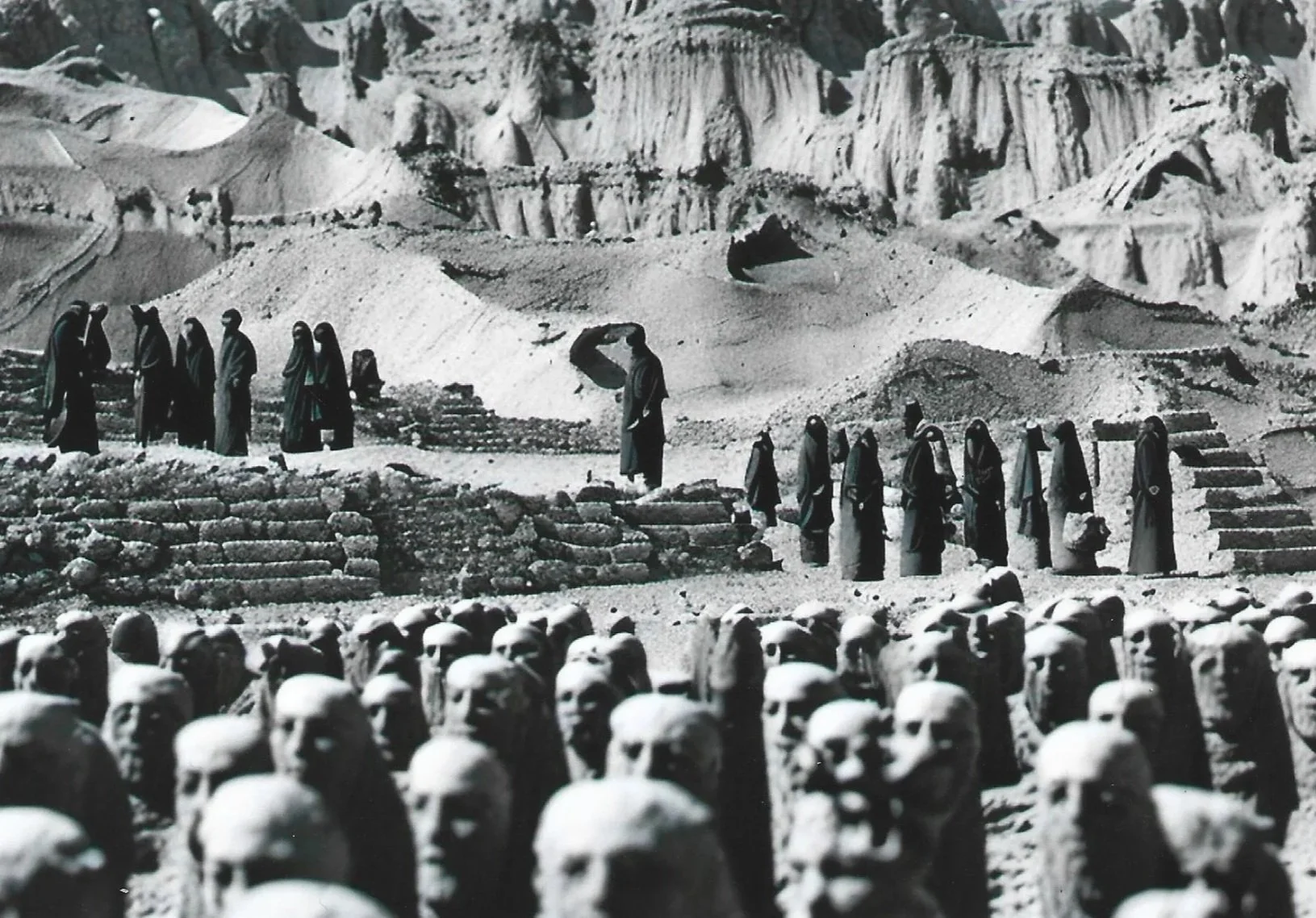
Parham Ghalamdar’s essay explores the crisis of the Euphrates as more than environmental decline. It reframes scarcity as a force that reshapes politics, ethics, and culture, asking what can endure, and who decides, when survival becomes a matter of selection.
“The sixth angel poured out his bowl on the great river Euphrates, and its water was dried up to prepare the way for the kings from the East.”
Revelation 16:12
A warning circulates in Iraqi policy talk and international analysis¹: the Euphrates, a roughly 2,700 km river that runs from Turkey through Syria into Iraq and supports farming, power, and drinking water for millions, could be dry by 2040. The line travels easily because it fits a headline or a briefing slide. It also invites the wrong debate, as if the point were prediction rather than condition.
The date functions less as prophecy than as a system alert. It signals a basin approaching a threshold where ordinary life can no longer run on default settings. Even if the year shifts, the structure of the warning holds: the conditions that made the Euphrates dependable are eroding faster than governance can adapt.
From scarcity to structure
The river is not only water. It is shared infrastructure and shared liability. When it weakens, it reshapes political life. A river in crisis becomes a bargaining chip, a pressure point, sometimes a weapon, without a shot fired. Neighbors turn into permanent negotiators, usually with unequal leverage. Hydrology and leverage. Policy analysis often points to the gap between promised flows and present reality. A commonly cited baseline is a minimum average of 500 cubic meters per second from Turkey into Syria; recent reported flow has been closer to 200. Whether treated as precise measurement or rough indicator, the direction is unmistakable. Scarcity is no longer a temporary shock. It is becoming an operating condition.
Scarcity is rarely only natural. It is social, administrative, and uneven. The same reduction lands differently depending on whether one can drill deeper, buy filters, relocate, pay bribes, cross checkpoints, and secure permits. A farmer downstream may watch a planting season fail because irrigation hours get cut, while a wealthier household in a nearby city keeps taps running longer by buying tanker water and home filtration. A family on the move may find that the problem is not only water but paperwork: one checkpoint wave-through, one checkpoint stop, one permit granted, one permit denied. Scarcity is never just less water. It is more sorting.
“The end does not arrive as a single event. It arrives as a change in tempo.”
This is why talk of “the end” misleads. The end does not arrive as a single event. It arrives as a change in tempo. First, small limits become normal: pump hours reduced, irrigation rotated, tanker trucks priced out of reach. Then rationing hardens into paperwork: permits for water delivery, lists of “priority” neighborhoods, fines for “illegal” wells, emergency decrees that keep getting renewed. A family does not feel the end as one day. They feel it as queues, rules, and refusals. The end arrives as administration.
Under such conditions, values cease to be decorative. They decide who is moved to the front of the queue, who is sent away, who gets described as “wasteful” or “risk.” A policy memo can turn into a moral judgement in one sentence. Ethics can appear private when the ground holds. When it does not, ethics becomes logistics.The Euphrates warning therefore raises a cultural question alongside a political one: what ideas and practices can live through constraint without turning cruel? Easy answers take the form of slogans, despair, or fantasies of technical fixes. They skip the hard task of selection. What gets carried forward. What gets dropped. Who gets to choose.
Selection under pressure
Noah’s Ark is instructive because it is blunt about limits. The container is finite, much will not fit. Its ethical discomfort comes from exclusion. It forces a postponed question into the present: under prolonged constraint, what cultural cargo is worth carrying forward, and what must be left behind?
Selection is already underway: platforms preserve what drives engagement, markets preserve what can be priced, and states preserve what secures borders and projects force. Whatever archive survives will be the one current systems can reproduce most easily, not necessarily the one we would endorse.
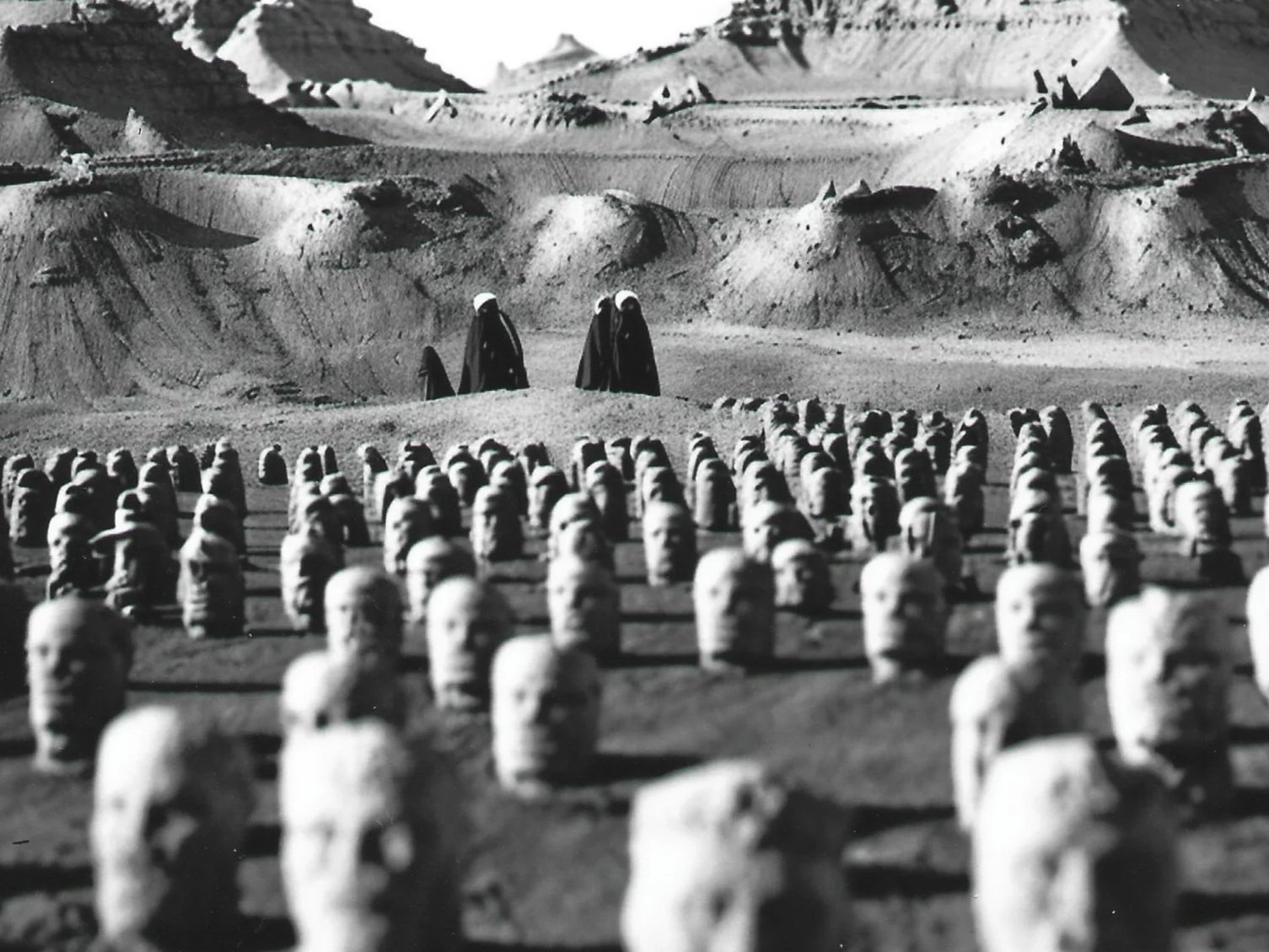
Plate 1. Untitled (Rig‑e Jen, post‑collapse series). Black‑and‑white photographic print (process unknown). Colonel Dr. Seyed Zeinolabedin Salimi Ashgouri. Early 2000s (exact year unknown; post Iran–Iraq War). Private collection of Parham Ghalamdar. Placed here to insist that selection precedes consent. The image reads as an assessment artefact: recording already functions as sorting, quietly preparing decisions about what matters, what counts, what becomes expendable.
I call the products of this practice “Deep Objects”²: cultural objects built to persist across broken contexts rather than trend within stable ones. A deep object might be a text, image, score, instruction set, compact tool, story retellable without electricity, or file format copyable without permission. It could be as abstract as a political procedure like democracy or even communism, but only if it survives copying, distortion, and pressure without collapsing into mere sorting. It could be as physical as the Baghdad Batteries artefacts. It might be clay because clay survives time, or plain language because plain language travels. The form is secondary. The time horizon is decisive.
To select and care for a deep object is to curate, and this is the deeper problem. Here, “curator” does not signal institutional taste but caretaking under constraint. Plate 2 shows the shift: the photograph stops being a picture and becomes a working surface. Marks turn it into a route map, a risk map, a custody map. Someone decides what gets circled, what gets crossed out, what gets kept, what becomes a dead end. When scarcity becomes normal, curation becomes an ethical discipline. The artist, thinker, or any person refusing self-deception becomes responsible for choosing what to carry, what to drop, and for stating why.
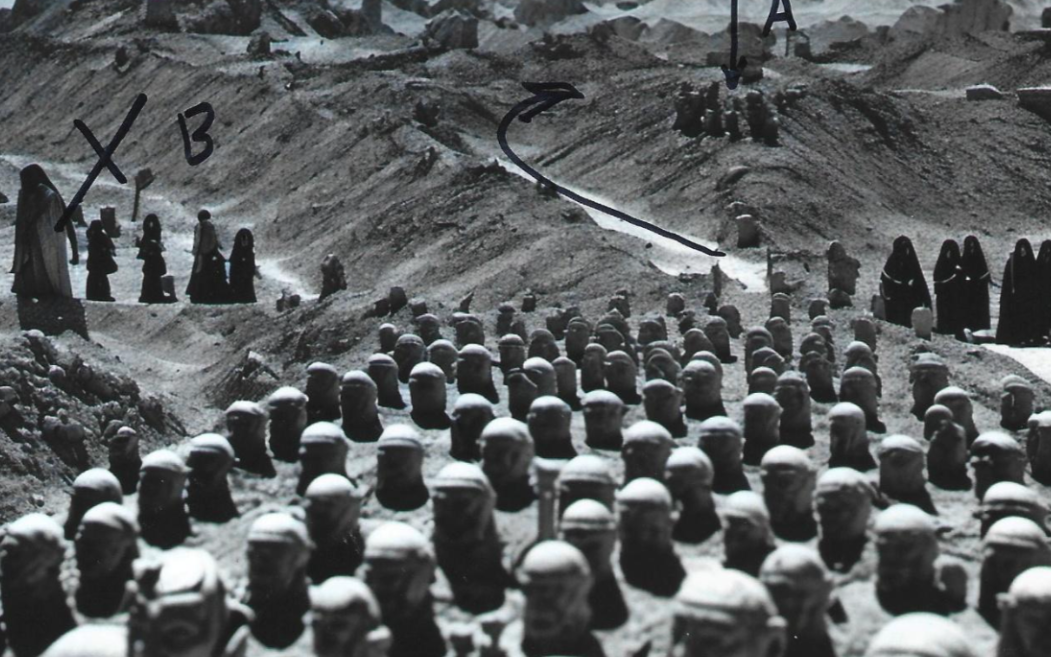
Plate 2. Untitled (Rig‑e Jen, working print). Black‑and‑white photographic print (process unknown) with later hand annotations (date unknown). Colonel Dr. Seyed Zeinolabedin Salimi Ashgouri. Early 2000s (exact year unknown; post Iran–Iraq War). Private collection of Parham Ghalamdar.
Here the hand marks outweigh the image’s “content.” They turn the photograph into a working surface, closer to a briefing page or field note than to display. The marks might be analysis, instruction, or custody. They show the archive under pressure: someone grouping and separating, marking routes and dead ends. Collapse forces selection, and selection leaves a trace.
This brings the question of integrity into view. Crisis makes it easy to smuggle domination through necessity. “There is no alternative” sells faster under scarcity. Selection becomes a mask for cruelty unless criteria remain visible, arguable, open to revision.
What deserves a place on the ark?
Before answering, it helps to stay with the problem a moment longer. Under scarcity, many ideas that sound generous in times of abundance begin to fracture. Rules meant to protect turn into tools for exclusion; efficiency turns into triage; security language expands until almost anyone can be described as a threat. The question therefore cannot be which ideas sound admirable, but which ones still hold when resources shrink and pressure rises. Not “good ideas” in the abstract, but ideas and methods that remain humane when resources are low. This is the stress test. If a value collapses into scapegoating, exclusion, or security theater under pressure, it was probably a comfort dependent on abundance.
Also necessary are practices that preserve shared reality as institutions weaken. When trust erodes, rumor begins to govern and conspiracy supplies a sense of agency. What must be carried are habits of truth without a single authority: recording claims, tracing evidence, preventing disagreement from sliding into extermination. This is not technocracy. It is the minimum for living together.
Care must also survive without purity. Under pressure, “community” can become coercive, demanding loyalty and punishing deviation. Worth carrying are forms of solidarity that allow conflict without turning difference into betrayal, and ways of sharing scarcity without making sharing itself a hierarchy.
An ark without refusals becomes a museum. But a museum assumes stable conditions: enough space, time, and resources to keep everything. An ark exists because those conditions have disappeared.
Custody and refusal
Do not preserve optimization as a moral ideal. As a worldview, it reduces lives to variables and deaths to acceptable costs. Under water scarcity it hardens into bureaucratic violence that claims it only followed numbers.
Do not preserve the belief that markets fairly allocate survival. Pricing can coordinate distribution, but it is indifferent to dignity. In a crisis, price becomes a weapon and “efficiency” becomes justification for abandonment.
Do not preserve image culture that treats suffering as content. Drought and displacement will generate images that travel faster than accountability. Some mobilize aid; many habituate and deaden. A deep object should not become crisis entertainment.
None of this replaces policy. Deep objects will not negotiate treaties, repair infrastructure, lower temperatures, restrain upstream states, or protect people from border violence. The Euphrates warning remains material and demands material action.
It also exposes a cultural failure. Dominant systems select what is easy to reproduce, monetize, weaponize, and administer. They do not select for what remains humane under constraint. If the end arrives as procedure, so will beginnings: improvised agreements, local experiments, mutual aid, new ethics of rationing, new forms of repair. The question is whether cultural tools exist to keep those beginnings human, or only tools that make sorting easier.
“The task is custody: choosing what deserves to remain thinkable when easy futures are gone, and refusing to pretend the choice is neutral.”
So I return to the river, because it is the source of the whole problem and the measure of whether any of this talk holds. The Euphrates warning reads like a crash report: failure conditions already visible, and a prompt to decide what we will do when normal rules no longer work. Deep objects, curation, and refusals are not side themes. They are ways of keeping selection from becoming quiet cruelty when scarcity hardens into routine. If 2040 is even roughly plausible, the end is already in motion as tightening limits. The task is custody: choosing what deserves to remain thinkable when easy futures are gone, and refusing to pretend the choice is neutral.
That is integrity here. Not purity. Not moral theater. The refusal to outsource selection to systems that will choose cruelty by default.
Notes
1. Center for Strategic and International Studies (CSIS), “The Future of the Euphrates River,” CSIS Features, accessed 7 February 2026.
2. In his introduction to Persophobia (2024), Reza Negarestani describes the deep object as “a completely real computational-complicit object” grounded in Charles Bennett’s notion of logical depth. Drawing on complexity and information theory, he explains that “a sequence is deep if it yields its secrets only slowly: one will be able to discover all significant regularities in it only if one analyzes it long enough.” For Negarestani, the deep object is “a message in a bottle delivered across the gulfs of time… so compressed in a computational sense that it might look like a miracle to some, a baleful conspiracy to others, an ancient virus waiting for its host for some, and a universalist project to still some others.”
Parham Ghalamdar is a multidisciplinary artist working across writing, film, and visual practice. His recent writing includes Siahkal 2.0: An A.I. Resurrected Discourse on Marxism & Islam (2025), which he edited and co-authored, with further titles forthcoming. In 2025 he directed the experimental short film The Sight is a Wound, which has screened at over fifty festivals and platforms and received Best Short Documentary at the Gjon Mili International Video Art Festival and an Honorary Award for Efforts in Social Filmmaking at Activists Without Borders.