Roma Musicians and the Limits of Cultural Appreciation
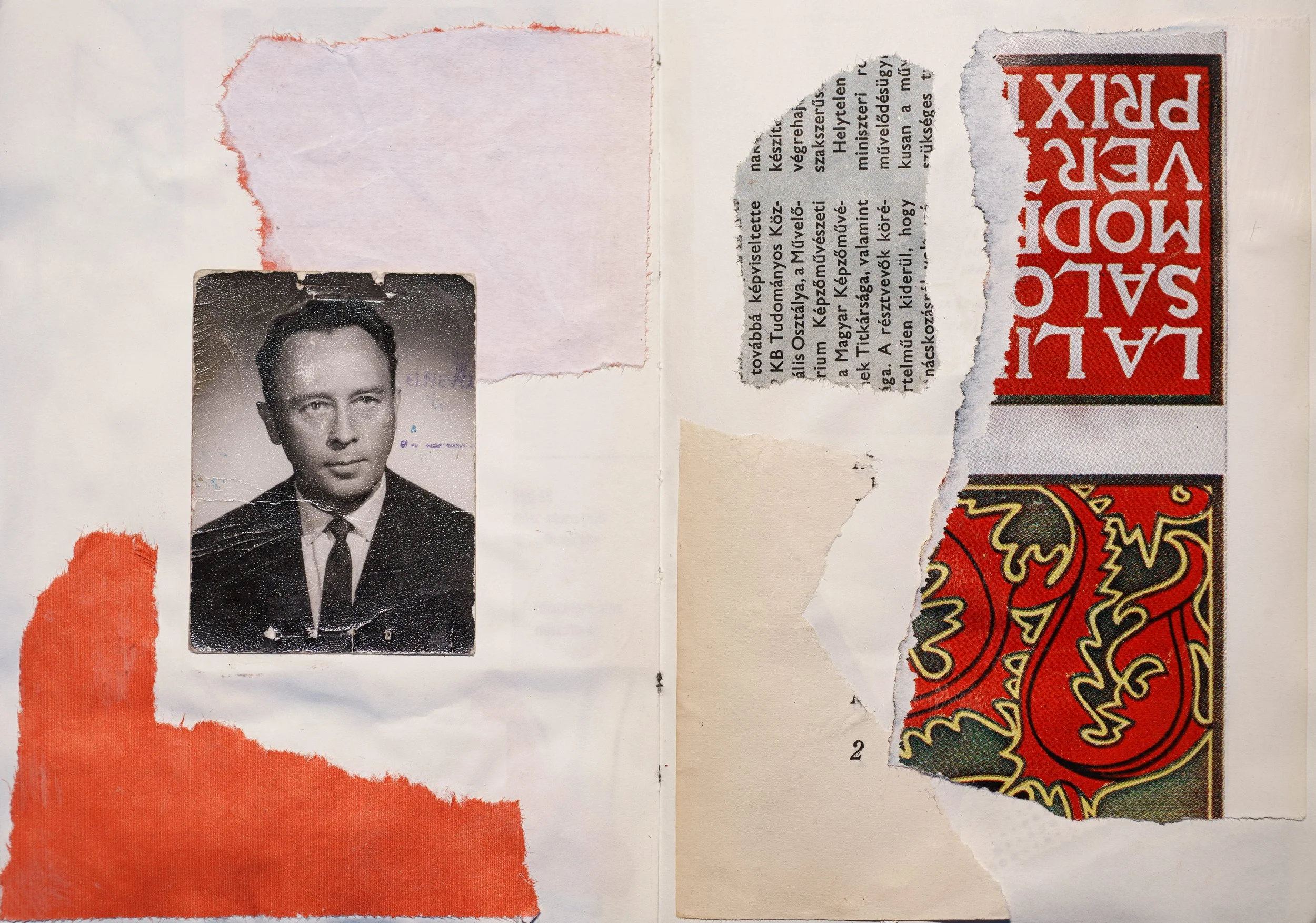
© Collage by Lola Peters.
In this personal essay, anthropologist Lola Peters draws on her fieldwork in Budapest to question what cultural appreciation really means when admiration for music does not extend to the musicians themselves.
We often think about the arts in political contexts as empowering, resisting, and norm-changing. Through the arts we can understand deeper social realities, but only if we consider the broader social context in which performance takes place. When we do so, however, we may begin to challenge the idea of the arts as a merely empowering force.
When I went to Budapest in January 2025 to conduct my ethnographic research on Hungarian Roma musicians, I entered the field with a belief in the power of music, only to be quickly confronted with my own romanticised view of the intersection between art and politics.
“Yet I soon began to wonder what the value of such appreciation is when it does not translate into recognition for the people who produce the music.”
I was interested in understanding the ways Hungarian Roma musicians navigate the paradox of being appreciated for their musical contribution to Hungarian society while simultaneously being marginalised for being Roma. Yet I soon began to wonder what the value of such appreciation is when it does not translate into recognition for the people who produce the music.
Café Giero: a musical refuge
Café Giero was a place I visited countless times during my fieldwork. A small cellar tucked between the Opera House and the Music Academy in Budapest’s fifth district, it was the last remaining venue where you could still hear Magyar Nóta deep into the night. Magyar Nóta translates to the “Hungarian song.”
This music has been played by Hungarian Roma for aristocrats and nobility since the 1400s. Later, the music moved into Budapest’s bustling city life and could be heard in cafés and restaurants on every street corner. For many Roma musicians, music became a means of survival, a livelihood rooted in service to others. Today, however, the genre has fallen out of fashion and is predominantly commodified for tourism.
Giero was a place where Roma musicians gathered after their restaurant gigs, the kind of place where the music did not begin until long after midnight. Not all the musicians loved this place: the drinks were warm and expensive. The café was run by an elderly Roma woman who had named it after her late father, himself a musician. Inside, two brothers and their father played cimbalom, double bass, and viola. They were relatives of the owner. The family was accompanied by a prímás (lead violinist), a student of the renowned Boros Lajos.
Looking Giero up on Google Maps, it does not seem very inviting, with reviews warning: “It’s a tourist scam, they just want your money.” But for the musicians, especially those who came there after work, this was not the point. It was a space to play, listen, drink, and be together without the pressure of performing for “outsiders.”
In this space, I learned much about the lives of these musicians: how they learned music, how deeply they immersed themselves in their craft, and the nostalgia towards the past. They would play for hours, switching instruments and teaching one another new songs. Once the Hungarian guests had left, ashtrays came out from behind the counter and the glasses seemed bottomless. The men laughed and cried over music while the elderly woman quietly poured drinks, waiting for them to finish so she could go home. She charged tourists double and the musicians half.
When the space was taken over
It was the place I wanted to visit on my final weekend of fieldwork, since many of my main interlocutors gathered there and I wanted to say goodbye. When I arrived, all the musicians were outside. Odd, since they had the privilege of smoking indoors, and it was still cold at the end of March. I was supposed to meet three others, but they told me: “There’s no space, it’s too busy.” We went downstairs anyway. The place was packed, unlike anything I had ever seen there.
I had spent nights in that café when no guests showed up at all. On those evenings, the musicians would eventually put their instruments away due to a lack of audience and just sit down, listening and commenting on the recordings of the masters from the 1930s. But that night was different. A private dinner was being held in the small space, which was filled with young Hungarians in eccentric outfits. Large candles were flickering and smoke curled through the air. It was an attempt to recreate a nostalgic version of a past life in Budapest, and “live Gypsy music” was, of course, part of the fantasy.
The café was far too small for such a scene. The more the guests drank, the more they danced. And the more they danced, the more the musicians were pushed into the corners of the room. After two hours, the musicians were playing in awkward, contorted positions, trying to keep performing as their space disappeared. Guests swayed and stumbled into them, bumping their instruments, reducing them to background props.
Eventually, the musicians needed a break. They stepped aside, trying to protect their instruments. While waiting for a drink, one of the guests put on a playlist and soon “Roma music” was blaring from the speakers into the space, but it was not Magyar Nóta. It was music from the Vlach Roma, the musical rivals of these Roma musicians. The guests were likely unaware of the offence, since, to the frustration of the Roma themselves, majority groups rarely make distinctions between different Roma communities.
“The last place in Budapest where these Roma musicians had carved out a space for themselves and their music was taken over. They had been pushed out.”
It was the final straw. The musicians who were scheduled to play went outside for a smoke. The others, who had come just to relax and be with their peers, quietly went home. The last place in Budapest where these Roma musicians had carved out a space for themselves and their music was taken over. They had been pushed out.
Playing without knowing for whom
Performance is a fragile practice; by exposing its full dynamics, it hyper-visibilises the political or social dynamics at play. This means that we cannot see the performative arts as an object but as a social process in which the sonics of performance are not the entirety of music, but the whole context of musical realities: audiences, venues, payment, and responses.
Nearing the end of my fieldwork, I received a call from a friend whom I had asked a while ago if I could accompany him to one of his performances. He called me, saying one of the three well-known Roma violinists in Hungary had asked him to play the next day and that I should come along. They did not give him any additional information on what they were going to play, for whom, for how long, or even about payment. Just an address. More often than not, this is how things worked: “You just simply show up and play.” We only realised it was a birthday party once we arrived.
We entered a big café located in a cellar in Budapest’s fifth district, filled with balloons. The musicians arrived before the guests, around six in the evening, helping to set up the space, quietly assuming roles that extended beyond that of performers. When realising they would not have to play for another two hours, they went through their usual routine of drinking whiskey, smoking cigarettes, and talking. About music, other musicians, bad musicians, good musicians, and legendary musicians.
The rumour that night was that the celebrated woman had sexual relations with the violinist, and that was the reason we ended up there that night. The violinist gained fame when he and his band found themselves bored in a lousy jazz bar in Brussels and decided to improvise on Magyar Nóta. He took off and has been playing all around the world since, known for playing all sorts of genres with the renowned “Gypsy twist.”
Although the word in the community was always that this music was a “phoney version of the Magyar Nóta”, it was okay: he was a good musician and made some good money for himself and the musicians around him. When back home in Budapest, he would take on small gigs, like this one, which seemed like a favour against the backdrop of his well-esteemed career.
The band started playing from 8 p.m. until after midnight, performing everything from jazz to Argentinian tango to classical music to Hungarian folk songs, without so much as a soundcheck. Like always, the musicians were suited up, beards trimmed, shoes polished. Their professionalism and understanding of their craft had already been proven, but excelled the moment the instruments were picked up.
The woman was proud to know the violinist, parading him around like the guest of honour, instructing him on what to play with a slightly elevated tone from across the room, showing off her gifts, and introducing her friends to him. Her admiration, however, was only caught in those performative moments. One moment she would ignore him, the next she was clinging around his neck like a feverish birthday girl.
Meanwhile, the crowd treated the music more as a background nicety rather than the main activity of the night, not actively engaging despite the woman’s somewhat awkward attempt to get her guests dancing. The guests –well-mannered people who all obediently brought their high-end bags of presents, all piled up on the specially assigned ‘present table’ in the corner of the dim-lit room – were preoccupied with talking to their colleagues, friends and acquaintances.
“Music swelled as the woman stood before her guests, cakes in front of her, musicians behind. She smiled and said, ‘You can take pictures of me if you want, don’t be ashamed of the Gypsies.’”
As the evening drew to a close, two large cakes with lit candles were brought in from the kitchen. Music swelled as the woman stood before her guests, cakes in front of her, musicians behind. She smiled and said, “You can take pictures of me if you want, don’t be ashamed of the Gypsies.” The room erupted in laughter. The celebrated lady got in her position to pose.
The musicians did not laugh. They stood in silence, awkward and exposed, the veil of polite appreciation abruptly lifted. They picked up their instruments again and played for about another hour.
Afterwards, the bass player walked up to me and said: “Now you see.”
The limits of cultural appreciation
The musicians are invited, paid, and even praised because of their musicianship, while simultaneously being racialised through it. Their inclusion is conditional, granted only when they occupy the role of entertainers, not peers. They may be welcomed into intimate spaces as friends or acquaintances, but under terms that reaffirm existing social hierarchies. Thus, the appreciation for their talent does not translate into respect for their personhood. In this setting, their value is reduced to their instruments. Their racialised bodies, and by extension, their musical presence, are simultaneously desired and disavowed.
Performance, in this context, becomes a medium through which political and moral orders are constructed and sustained. The racialization of Roma performers is not incidental but embedded in the event's structure. Approaching music as an active force reveals how musical practices may articulate and reproduce political and moral frameworks of marginalisation.
This raises the question: can we speak of true cultural appreciation when that appreciation does not venture beyond the stage – or even beyond the sounds coming from the instruments – to the musicians who produce them?
Lola Peters (2000) is an anthropology graduate and researcher searching for the space between academia and artistic practices. Fascinated by the role of the arts in socio-political contexts, she seeks stories of the unheard. Furthermore, she is an editor for Simulacrum Magazine.